Lesson
Lesson 1: Match the land to the life you actually want
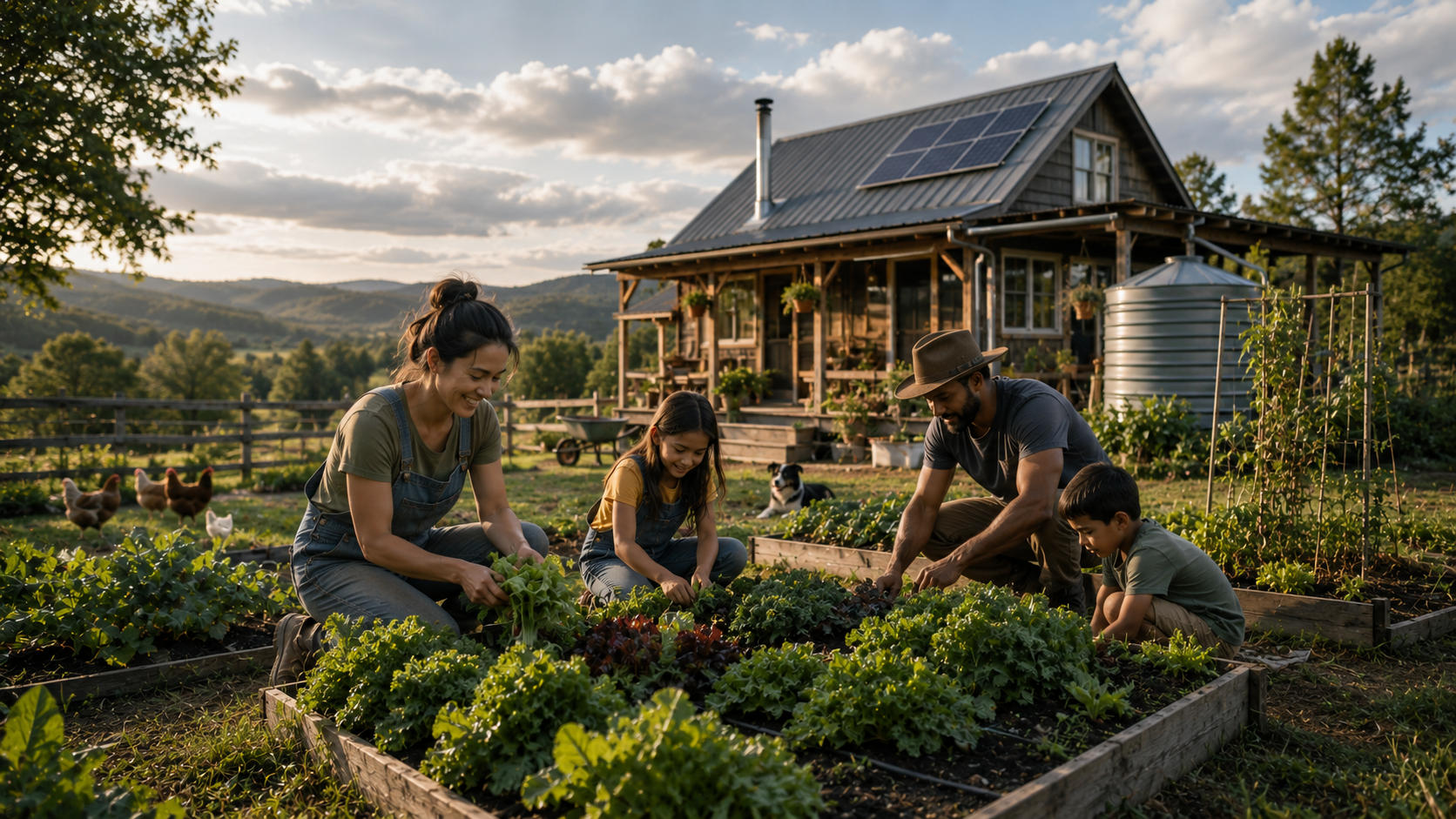
A good homestead begins with fit. The land should support the life and systems you want to run, not just the identity you want to imagine.
Start with daily life
The homestead question is not only about acreage. It is about how you want to live every day. Shelter, commute, water, food production, storage, animals, market gardening, and maintenance all need to fit your actual capacity.
The stronger the match between land and life, the more durable the homestead becomes.
Acreage only matters in context
More acreage can help, but only if the additional land is usable and aligned with the systems you want. Many buyers need a better layout, better water, or better access more than they need more total acres.
Small land can support a meaningful homestead when the systems are chosen well. Larger land can still fail when the workflow is scattered or the infrastructure is weak.
Choose your first systems
Do not start by asking what the full future homestead might contain. Start by deciding which systems matter first:
- shelter,
- water,
- food production,
- storage,
- backup power,
- animal care,
- or income-supporting land use.
Those priorities shape the right parcel and the right first phase.
Treat land as a working platform
A homestead is not just scenic property. It is a place where daily systems need to work repeatedly. Paths, water, drainage, movement, sun exposure, and proximity between uses all matter more than abstract romantic appeal.
Checkpoint
- Define the daily life and systems you want the property to support.
- Match acreage to real use instead of idealized scale.
- Choose the first systems that matter most in phase one.
- Evaluate the parcel as a working platform, not just a pretty setting.
Apply it now
Go deeper
Lesson
Lesson 2: Set up shelter, water, and daily workflow first
Homestead projects become chaotic when the basic daily systems arrive too late. Shelter, water, access, and workflow should come before decorative expansion.
Shelter changes the whole project
The first reliable shelter or base changes how work happens on the land. It gives you storage, rest, weather protection, and a place to keep tools and systems organized.
That first shelter does not need to be grand. It needs to reduce friction and make the property more workable.
Water is a core system, not a side detail
Reliable water affects living, growing, cleaning, animals, and resilience. Wells, storage, filtration, hauling, and seasonal reliability all matter.
The earlier you understand the water system, the more realistic every other homestead decision becomes.
Workflow beats acreage
A property gets easier when daily movement makes sense. Garden, tool storage, shelter, compost, water access, parking, and work zones should support each other instead of fighting each other.
Bad workflow turns even a promising property into a constant drain of time and energy.
Start with systems that make the next systems easier
Basic access, storage, water, and shelter tend to unlock everything else. They make food production easier, tool use simpler, and later expansion more rational.
That is why these systems deserve priority.
Checkpoint
- Secure a useful shelter or base early in the process.
- Understand your water path before expanding food or animal systems.
- Lay out daily work zones to reduce repeated friction.
- Prioritize systems that make later phases easier and cheaper.
Apply it now
Go deeper
Lesson
Lesson 3: Build food systems and resilience in layers
Self-reliance gets stronger when it grows in layers. The point is not total isolation. The point is to reduce fragility with systems you can actually maintain.
Food production should match your capacity
People often overshoot here. A small, well-run garden or market-garden block can be more productive than a sprawling setup that is too hard to maintain.
Start with crops, storage, and routines that support your household or your first direct-sales model well.
Preservation is part of production
Growing food is only half the system. Storage, preservation, wash-pack flow, freezing, drying, or root-cellar logic matter just as much if you want the work to have lasting value.
A functioning homestead thinks beyond the harvest.
Resilience is layered, not absolute
Backup power, water storage, food storage, repair tools, and modest redundancy create more security than dramatic off-grid posturing. Most people benefit more from layered resilience than from trying to sever every dependence at once.
That calmer approach is usually cheaper, more sustainable, and more realistic.
Add complexity only after basics work
Animals, greenhouses, larger market-garden plans, orchards, or more advanced systems all have their place. They work best when the basics are already stable: shelter, water, storage, workflow, and a repeatable daily rhythm.
Checkpoint
- Choose food systems that match your time, water, and space reality.
- Plan preservation and storage alongside production.
- Build resilience in layers instead of chasing total off-grid purity.
- Add complex systems only after the basics are stable.
Apply it now
Go deeper
Lesson
Lesson 4: Grow into a working homestead over time
A durable homestead is built through sequence, observation, and adjustment. The land should become more functional as each phase clarifies what belongs next.
Observe before you scale
The first year on the property tells you a lot. Water behavior, shade, wind, movement, tool storage, maintenance burden, and what you actually use every week all become clearer once you are living or working there.
Use that information before funding the next phase.
Expand what is already working
A good growth pattern looks like this:
- stabilize the basics,
- improve workflow,
- deepen the most useful systems,
- only then add more area, animals, or infrastructure.
That order keeps the homestead legible and useful.
The land should lower fragility, not raise it
If every added system increases stress, cost, and maintenance faster than it increases resilience or usefulness, then the property is drifting away from a working homestead.
The right expansion pattern makes daily life calmer and more capable.
Build the version you can sustain
A working homestead is not the most impressive one. It is the one that still functions when energy is low, the season is hard, or money is tighter than expected.
That is the real finish line: systems that are useful, maintainable, and grounded in your actual life.
Checkpoint
- Let the first year of use reshape the next phase.
- Expand what is already proving useful before adding new complexity.
- Measure growth by lower fragility and better workflow.
- Build the homestead you can sustain, not the one that only looks good online.
Apply it now
Go deeper
Supporting docs
Reference guides for this course
These are the narrower checklists and supporting explainers that pair with this course. Keep them open when you need a field-ready reference while working through the larger decision path.