What Hybrid Off-Grid Living Actually Looks Like
Answer-first summary
Hybrid off-grid living is not a purity test. It is a practical setup where the property remains connected to modern systems but can switch into a more self-reliant mode when needed. For many buyers, that is a better fit than full off-grid life because it lowers stress, preserves convenience, and still builds real resilience.
Hybrid off-grid is really about optionality
The phrase sounds technical, but the idea is simple.
You live a normal life when normal systems work. You keep the grid. You keep convenience. You keep everyday routines.
But you also build the ability to keep going when those systems fail.
That is hybrid off-grid living.
Most people do not want full off-grid maintenance
True off-grid living can work, but it often means more labor, more system management, and less margin for error. That is exactly why many practical landowners settle on a hybrid model instead.
They want:
- backup power without giving up normal household use,
- a well or stored water without pretending infrastructure is free,
- some food production without making the entire property a full-time farm,
- and enough preparedness that an outage is inconvenient, not destabilizing.
The daily life side still matters
One reason hybrid living makes sense is that people still have jobs, families, towns nearby, and modern routines. They may want to be 20 or 30 minutes from groceries, medical care, and supplies, not three hours from everything.
That is not a contradiction. It is a better fit for how most people actually live.
Where hybrid systems usually show up first
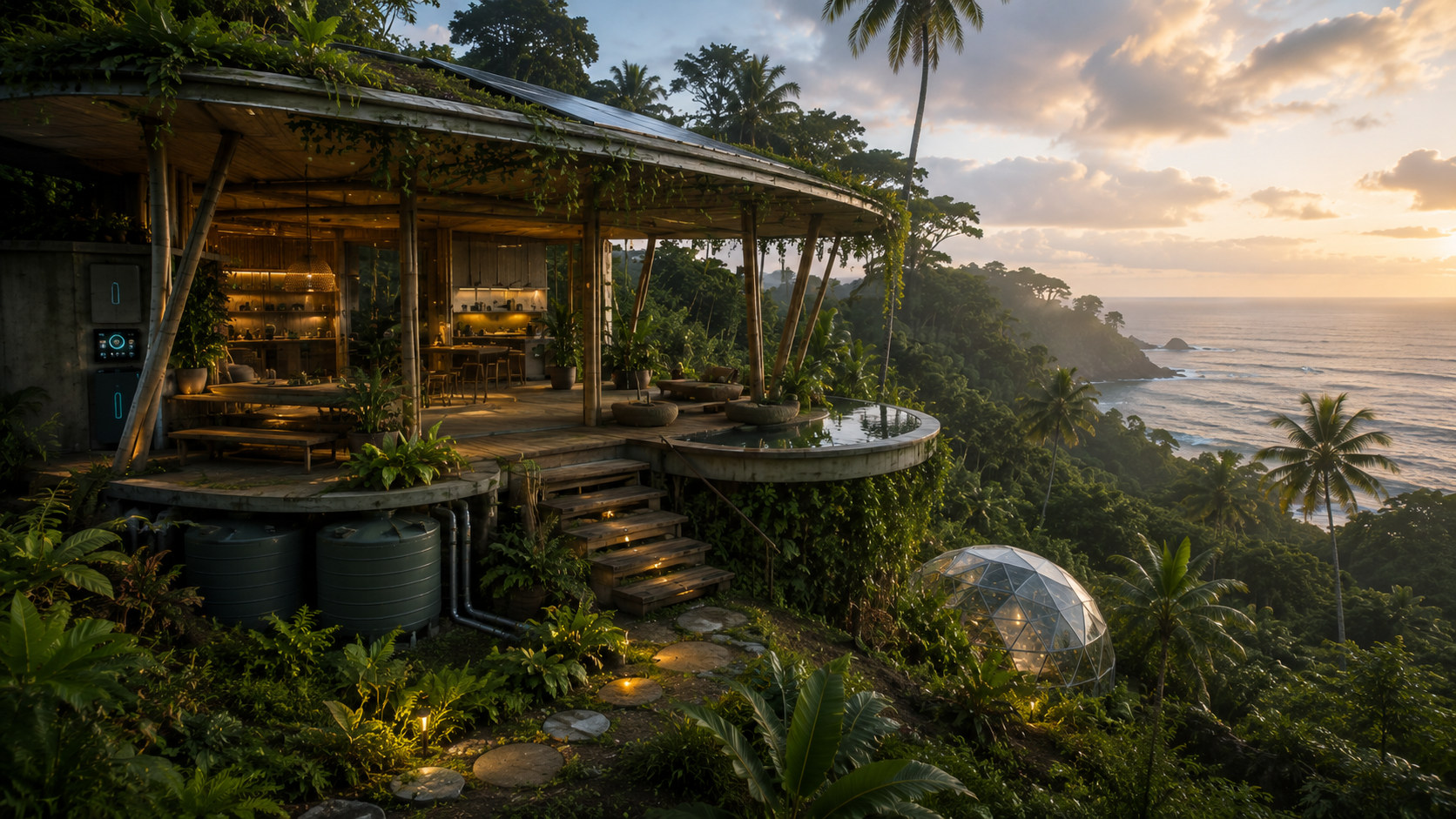
For many households, the first hybrid layers are:
- battery backup,
- a generator,
- a more resilient heating or cooling plan,
- stored food and pantry depth,
- water filtration or storage,
- and a garden or small food area that gets used consistently.
These are the kinds of systems that reduce dependence without turning the whole property into a mechanical burden.
The property still has to pencil
This is the part people sometimes miss. “Off-grid” does not erase costs.
You still have taxes, insurance, maintenance, repairs, wells, septic, tools, and replacement cycles. The strongest hybrid setups usually come from people who build deliberately and modestly instead of trying to impress themselves with complexity.
That is why Cheapest Ways to Live on Land and How to Build a Homestead in Phases matter here. Hybrid living works best when it is built in layers you can actually afford to maintain.
Practical takeaway
Hybrid off-grid living is not about proving you can reject modern life. It is about reducing fragility while keeping what still serves you.
For most LandShop readers, that is the stronger long-term model.
Sources and further reading
FAQ
What does hybrid off-grid actually mean?
It means staying connected to normal systems like the grid while building backup power, water, food, and heating layers that make the property less fragile.
Is hybrid off-grid more realistic than full off-grid for most people?
Usually yes. It preserves convenience while still building resilience, which makes it more sustainable for many households.
Does hybrid off-grid living save money immediately?
Not always. Its value often comes from resilience, optionality, and lower disruption, not just short-term savings.
More questions in this topic
Ask LandShop
Need help applying this to a real parcel?
Bring your actual land, financing, tax, zoning, or build question into the LandShop community and pressure-test the plan before you commit.