How to Grow More of Your Own Food
Answer-first summary
Growing your own food does not require a perfect homestead or a giant farm. It starts with a few productive systems, a realistic amount of space, and the discipline to grow, preserve, and repeat what actually works for your household. For LandShop readers, the practical takeaway is simple: you can build food self-reliance in phases, whether you begin with raised beds in a yard, a small garden on a rural lot, or a larger property you plan to expand over time.
Self-reliance starts smaller than most people think
When people imagine growing their own food, they often picture a large farm, a finished homestead, or a property with every system already in place. That image stops a lot of people before they ever begin.
But food self-reliance usually starts much smaller.
It starts with learning what your household actually eats, what grows reliably in your climate, what can be preserved well, and how much space you really need to make a difference. A small, well-managed growing area can change more than people expect.
That is one reason this matters. The path to growing more of your own food is not all-or-nothing. It is iterative.
Most food-growing knowledge is still close to home
Food production in the United States is still rooted in family-scale ownership. USDA says family farms make up 95% of U.S. farms, and small family farms account for 85% of all U.S. farms.
That does not mean every family is feeding itself from the land. It does mean the knowledge and culture of growing food on a human scale is still alive. The real task for more households is reconnecting with that knowledge in a practical way.
You do not need a lot of land to begin
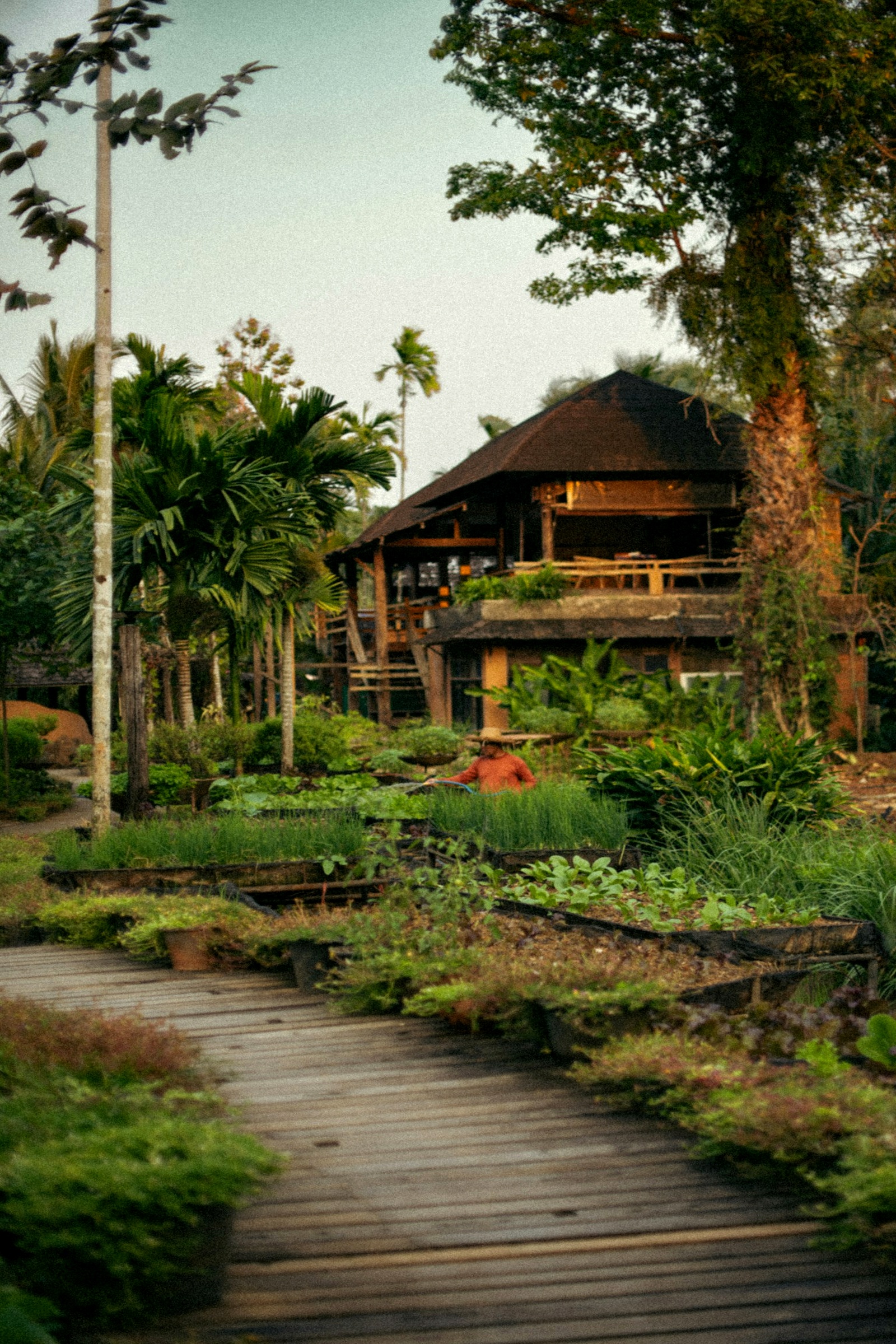
One of the strongest lessons from small-scale growers is that a modest amount of productive space can go a long way when it is used intentionally.
A household can start with:
- a few raised beds,
- a small in-ground plot,
- containers and herbs,
- a berry patch,
- a row of potatoes or storage crops,
- or a simple orchard edge with perennial food plants.
The goal is not to grow everything at once. The goal is to start with foods that:
- your family already eats,
- produce reliably,
- store or preserve well,
- and build confidence quickly.
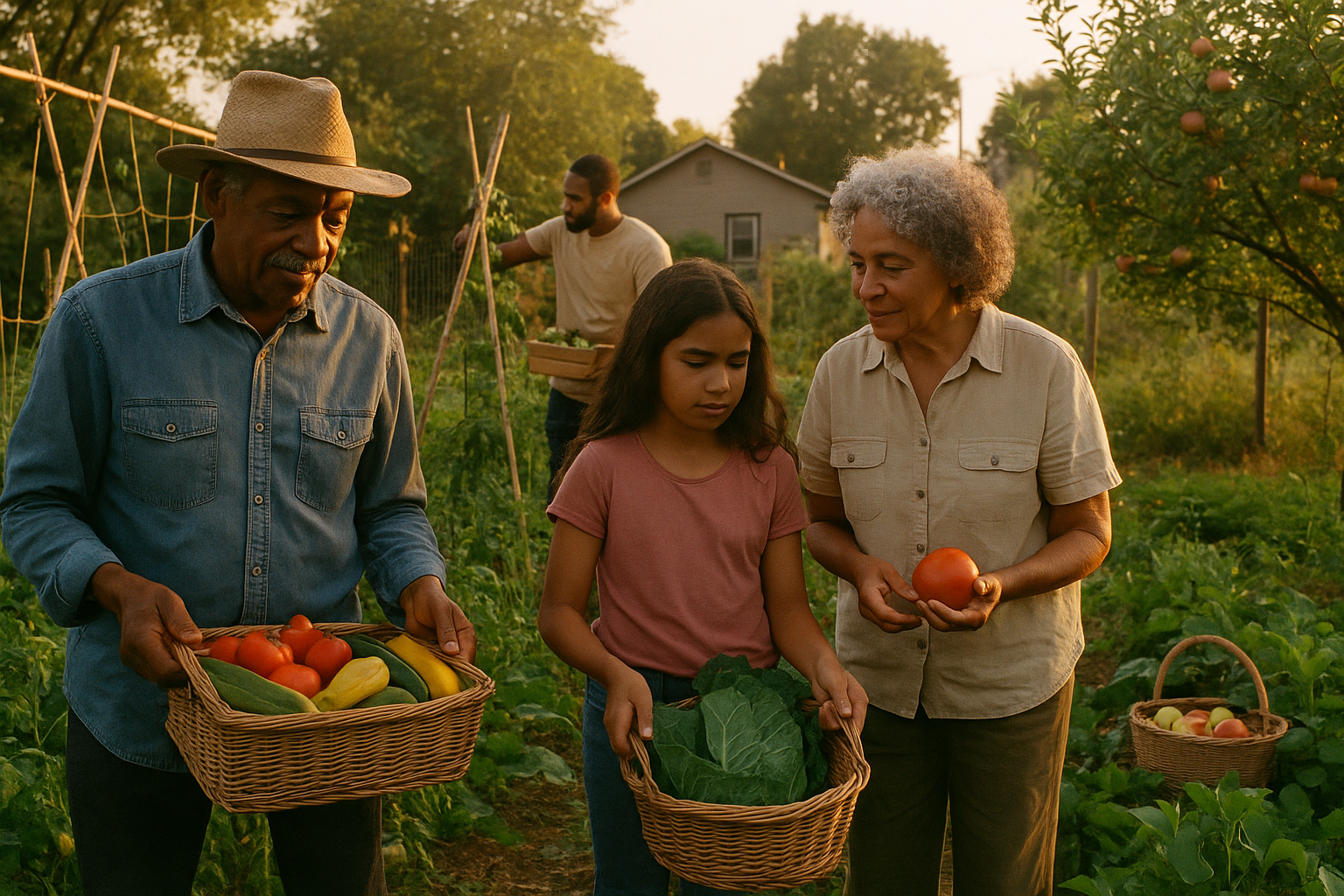
That might mean salad greens, herbs, beans, carrots, beets, tomatoes, potatoes, onions, cucumbers, or berries before anything more ambitious.
Food self-reliance depends on preservation, not just production
A lot of people focus on the harvest and ignore the second half of the system: what happens after the food comes in.
If you want to eat from your land for more than a few weeks, you need a preservation strategy. That usually means some mix of:
- drying,
- freezing,
- fermenting,
- canning,
- cool storage,
- or root-cellar style storage.
This is where self-reliance becomes real. Growing food in summer is one thing. Building a system that carries into winter is another.
That is also why crop choice matters. Storage crops, herbs, berries, greens, and staple vegetables all play different roles. You are not just growing produce. You are building a year-round household food system.
Small infrastructure changes can compound fast
Many people assume they need expensive infrastructure to grow meaningful amounts of food. In reality, incremental improvements often have the biggest effect.
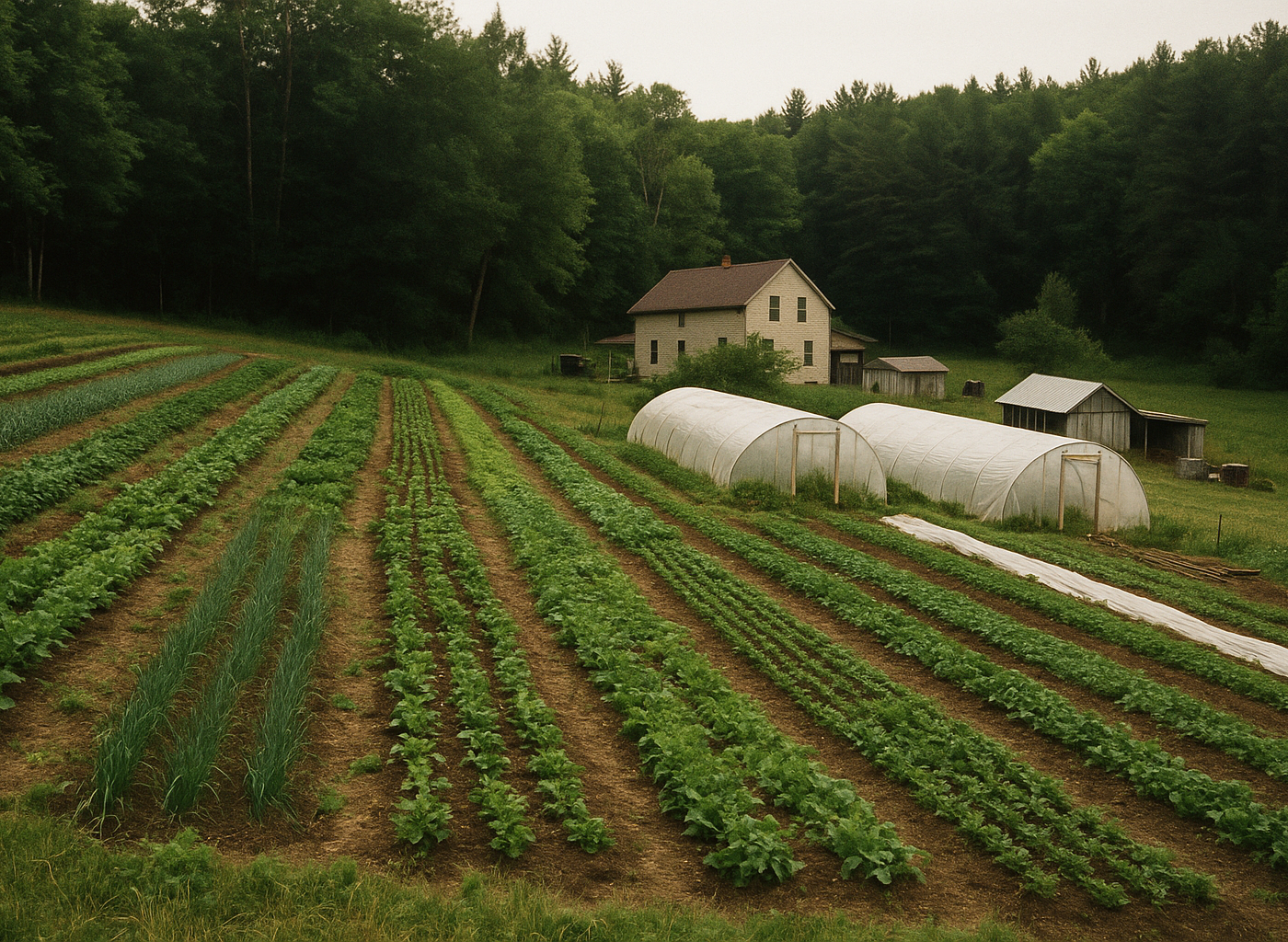
A compost system, irrigation line, shade cloth, simple fencing, harvest shelves, a chest freezer, or a small greenhouse can all change what your land can do.
USDA’s NRCS highlights this clearly in its high tunnel program. NRCS says high tunnels can extend the growing season, improve plant and soil quality, reduce erosion, increase soil water content, and help communities access local food for more of the year.
That is the bigger principle: self-reliance is often built through modest upgrades that improve consistency, not through a single giant leap.
Start with staples, then expand into diversity
It is tempting to grow a little of everything immediately. But the strongest home food systems usually begin with dependable staples and then broaden over time.
A practical order looks more like this:
- Grow easy foods you already use weekly.
- Add storage crops that reduce grocery dependence.
- Add herbs, berries, and perennials.
- Add preservation habits.
- Expand only after the first systems are stable.
That progression matters because self-reliance is about repeatability. You want systems you can manage every year, not a one-season experiment that burns you out.
The goal is not perfection. It is more agency
Even households that grow a lot of food usually still buy some things. That does not make the project a failure.
The point is to increase control.
When you grow more of your own food, you gain:
- more visibility into how it was produced,
- more confidence in what your family is eating,
- lower dependence on long supply chains,
- better awareness of seasonality,
- and more practical connection to the land itself.
That matters whether you are on a suburban lot or a rural acreage. Food-growing is one of the most direct ways to turn land from passive space into useful space.
Local food and self-reliance reinforce each other
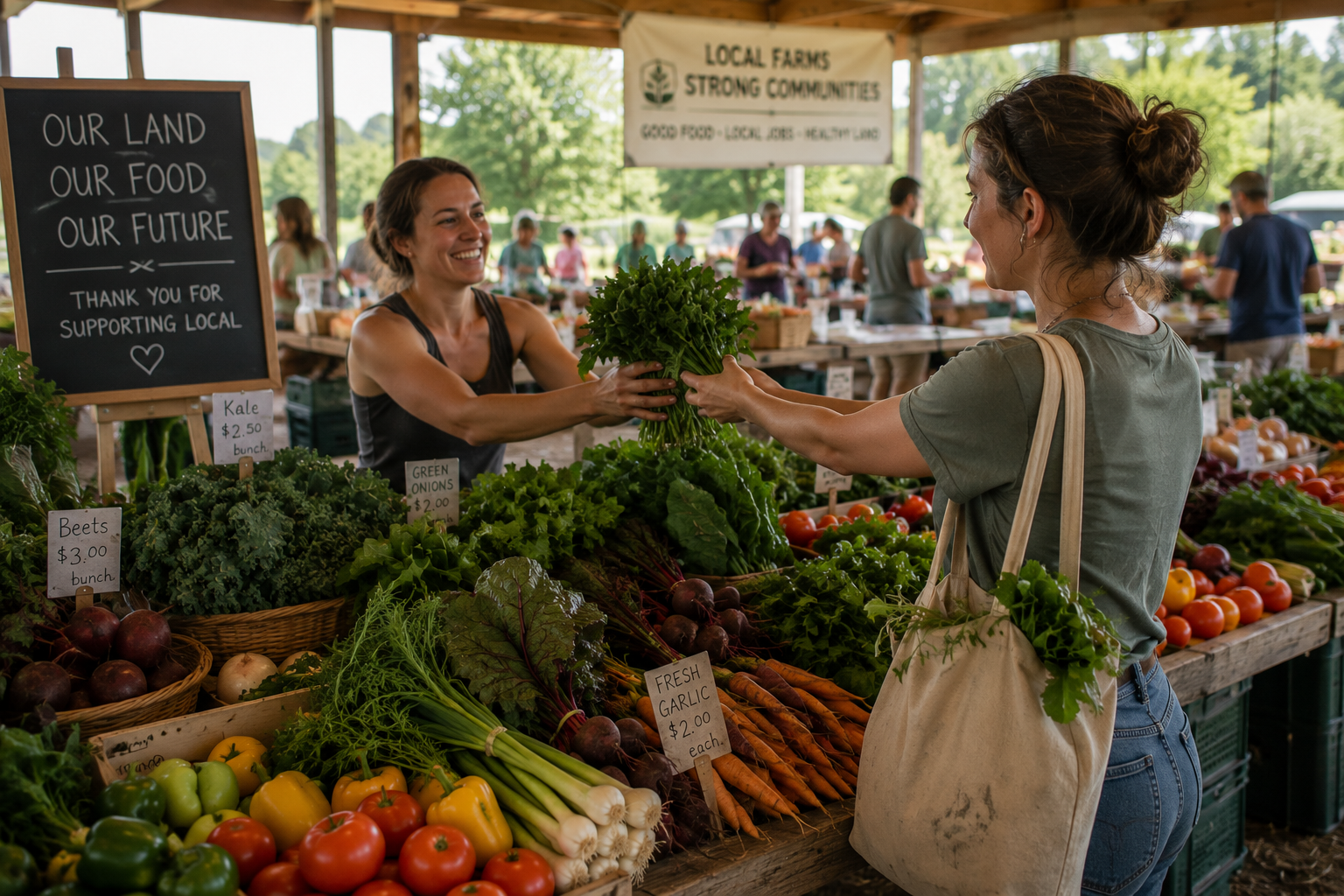
No household has to do everything alone. USDA reported that 116,617 farms sold directly to consumers in 2022, totaling $3.3 billion in sales.
That means your own garden or homestead can work alongside:
- farmers markets,
- farm stands,
- local eggs or dairy,
- nearby orchards,
- CSAs,
- and direct relationships with growers.
Self-reliance does not mean isolation. It often means building a stronger mix of home production and local peer-to-peer food relationships.
How to start if you have very little space
If you are in a small yard or compact lot, keep the first version simple:
- Pick one sunny zone and make it productive.
- Grow a short list of high-use crops.
- Add compost early.
- Keep watering easy and close.
- Learn one preservation method this season.
- Track what was actually worth the effort.
That is enough to begin.
How to expand later if you buy more land
If your long-term goal is more acreage, use the small version as training.
By the time you expand, you will already know:
- what your household eats most,
- what crops suit your climate,
- how much labor you can realistically manage,
- what storage you need,
- and what kind of land would actually help the system grow.
That makes you a better land buyer. Instead of chasing acreage for its own sake, you can buy for function: better water access, more sun exposure, more room for perennials, more room for storage, or more room for market-growing later.
Grow food, then grow the system
The strongest food-growing setups are not built in one season. They are built layer by layer.
First you grow some food. Then you learn what to preserve. Then you improve the soil. Then you add perennials. Then maybe a tunnel, a freezer, a shed, a fence, or more beds. Over time, a small productive space becomes a serious asset.
That is what LandShop is really interested in here. Growing your own food is not just a hobby. It is a form of land use, a form of ownership, and a form of resilience.
Want help thinking through land for gardens, orchards, homesteads, or a more self-reliant setup? Sign up for LandShop and ask questions in the community. You can compare systems, get practical feedback, and build your food plan step by step.
Sources and further reading
FAQ
Can I grow meaningful food for my household in a small space?
Yes. The key is to focus on high-use crops, improve the soil, preserve what you grow, and expand in phases instead of trying to produce everything at once.
What is the best way to start becoming more food self-reliant?
Start with crops your household already eats, build a simple watering and compost system, and learn at least one preservation method so your harvest lasts longer than the immediate season.
How does this connect to land ownership?
Food-growing turns land into a more useful asset. As your skills improve, you can evaluate future land based on sun, water, soil, storage potential, and how well it supports the kind of household food system you want to build.
More questions in this topic
Related links
Ask LandShop
Need help applying this to a real parcel?
Bring your actual land, financing, tax, zoning, or build question into the LandShop community and pressure-test the plan before you commit.