Agricultural Tax Exemptions by State
Answer-first summary
There is no one national agricultural property-tax exemption. States and counties use different systems, thresholds, forms, and rollback rules to value qualifying agricultural land below market value. Buyers should treat ag tax status as a jurisdiction-specific program that must be re-verified before purchase, not as a general promise that rural land will automatically carry cheaply.
> Last reviewed: April 9, 2026.
Start with the right assumption
There is no national “farm tax exemption” that works the same way everywhere.
What exists instead is a patchwork of state and local systems that may appraise qualifying agricultural land based on present use, productivity, classified use, or other reduced-value methods rather than pure market value.
That means the same five or ten acres can carry very different tax rules depending on where it sits.
New Jersey
New Jersey farmland assessment is tied to the Farmland Assessment Act and application process, and the state assessor materials make clear that the land has to qualify under the program rather than simply look rural.
That is why How New Jersey's Farmland Assessment Works remains one of the most useful state-specific tactical pages on the site.
Texas
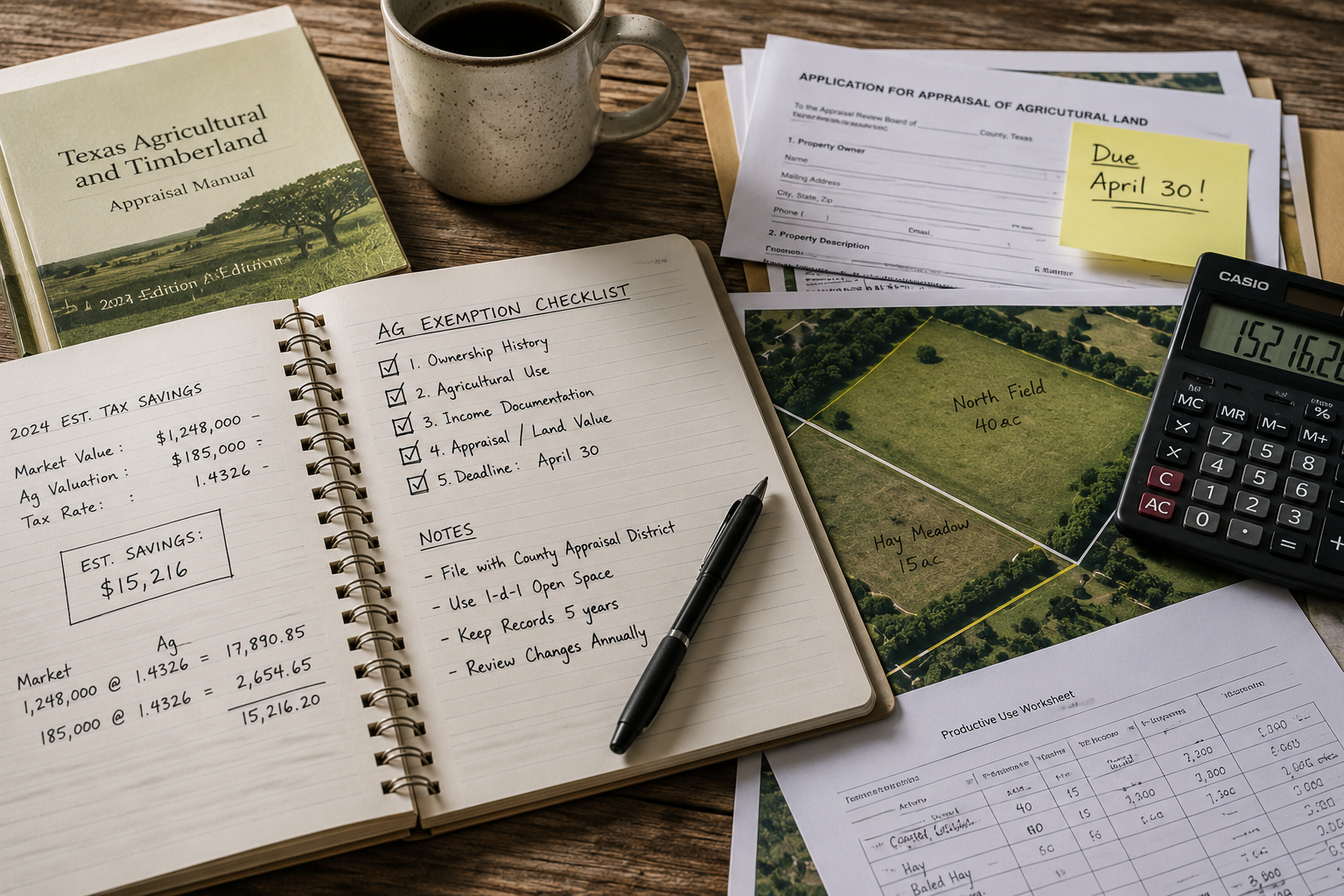
Texas uses special appraisal for qualifying agricultural, timber, and wildlife-management land. The productivity-value system is not automatic, and the Comptroller materials emphasize current agricultural use, local intensity standards, and rollback exposure if the use changes.
Florida
Florida uses agricultural classified use rather than a one-size-fits-all exemption. The valuation guidance is statewide, but approval still turns on the local property appraiser's process and the actual agricultural use of the land.
Georgia
Georgia's conservation-use and current-use systems run through state rules and valuation manuals, but buyers still need to understand county administration and the consequences of changing the use or ownership structure after purchase.
North Carolina
North Carolina's present-use value program is one of the clearest examples of state-specific treatment. The Department of Revenue publishes guidance and forms, but eligibility still turns on the statutory category and whether the land is actively used in a qualifying way.
Tennessee
Tennessee's Greenbelt system is another reminder that reduced-value treatment is programmatic, not automatic. Qualification and rollback exposure need to be checked before the deal, not after.
Practical takeaway
The safest way to use this topic is to narrow fast:
- state,
- county,
- current use,
- intended future use,
- rollback risk if the plan changes.
That is the path to real numbers.
Use the Farm Tax & Ag Exemptions Hub, then pair this with What Counts as a Farm for Property Tax Purposes? and How Agricultural Tax Breaks Work.
Sources and further reading
- New Jersey Assessors Handbook, Chapter 5: Farmland Assessment
- Texas Comptroller: Agricultural, Timberland and Wildlife Management Use Special Appraisal
- Florida Department of Revenue: Agricultural Classified Use Real Property Appraisal Guidelines
- Georgia Department of Revenue: QTP Appraisal Manual 2026
- North Carolina Department of Revenue: Present-Use Value Program Guide
- Tennessee Comptroller: Reports, Handbooks, and Reference Materials
FAQ
Is there one agricultural tax exemption that works nationwide?
No. Agricultural property-tax treatment is state-specific and often county-administered, with different qualification, filing, and rollback rules.
Why is rollback risk so important?
Because some states recapture part of the tax benefit if qualifying land changes use or leaves the program after purchase.
What is the safest way to verify ag tax status before buying?
Check the state guidance, then confirm the county application, current qualifying use, filing deadlines, and what happens if your intended use changes later.
More questions in this topic
Ask LandShop
Need help applying this to a real parcel?
Bring your actual land, financing, tax, zoning, or build question into the LandShop community and pressure-test the plan before you commit.