How Agricultural Tax Breaks Work
Answer-first summary
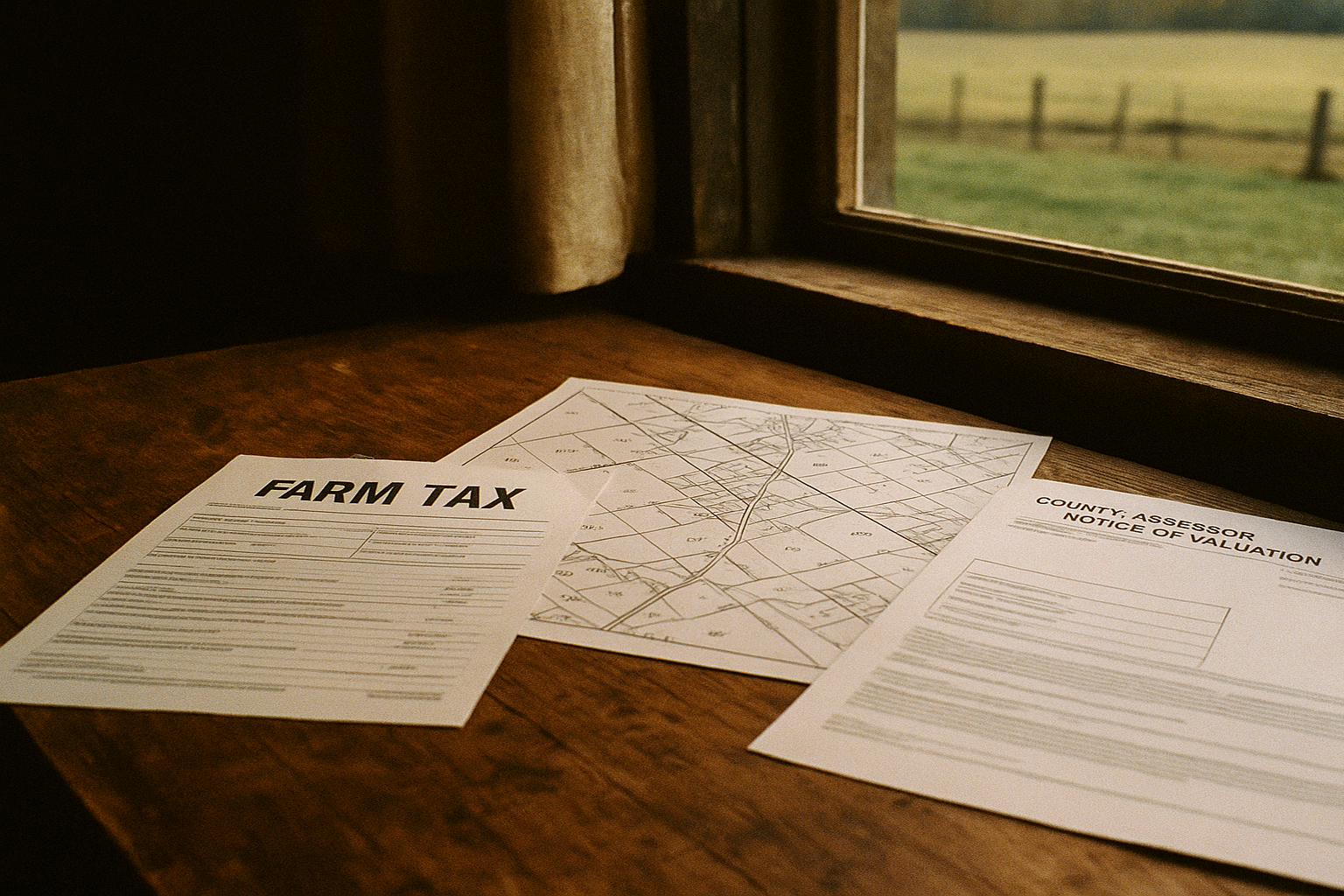
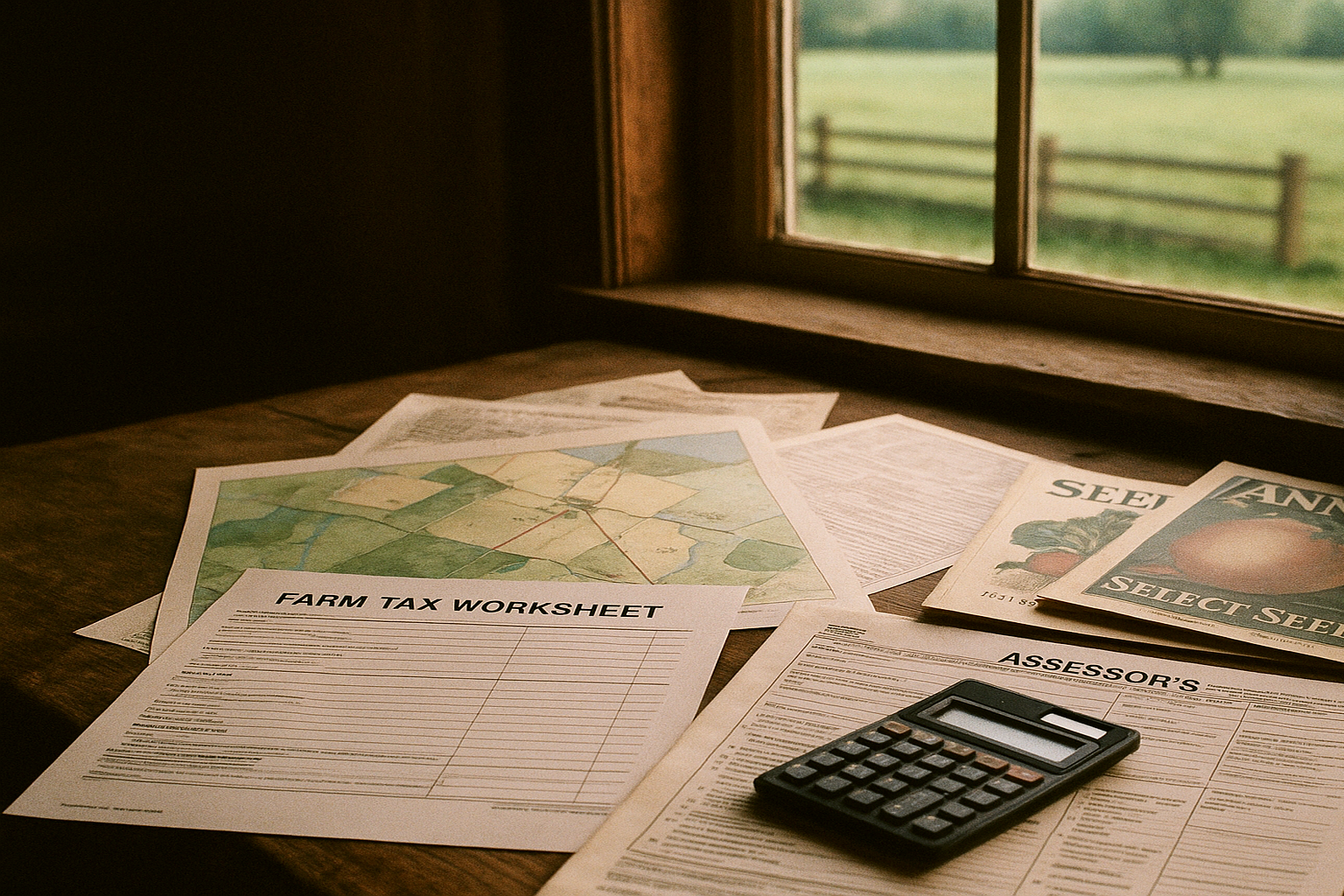
Agricultural tax breaks usually fall into two categories: income-tax rules for farm activity and property-tax programs that assess land based on agricultural use instead of full market value. The exact rules vary by state and county, but the common theme is the same: eligibility depends on active use, records, and compliance. Buyers should treat tax benefits as something to verify, not something to assume.
Start by separating two different tax questions
When people say “farm tax break,” they often mix together two very different things.
1. Income-tax treatment
This is about how farm income and farm expenses are reported, what can be deducted, and how the operation is treated for federal tax purposes. The IRS covers this in Publication 225, Farmer's Tax Guide.
2. Property-tax treatment
This is about how the land itself is assessed by the state or local tax system. Many states use some version of agricultural assessment, use-value appraisal, or productivity-based valuation instead of taxing qualifying farmland purely at development value.
These are related, but they are not the same thing.
Why this matters for land buyers
Many buyers assume farmland taxes will automatically be lower if they buy rural land and “do something agricultural” on it. That is not a safe assumption.
In practice, special treatment usually depends on:
- minimum acreage,
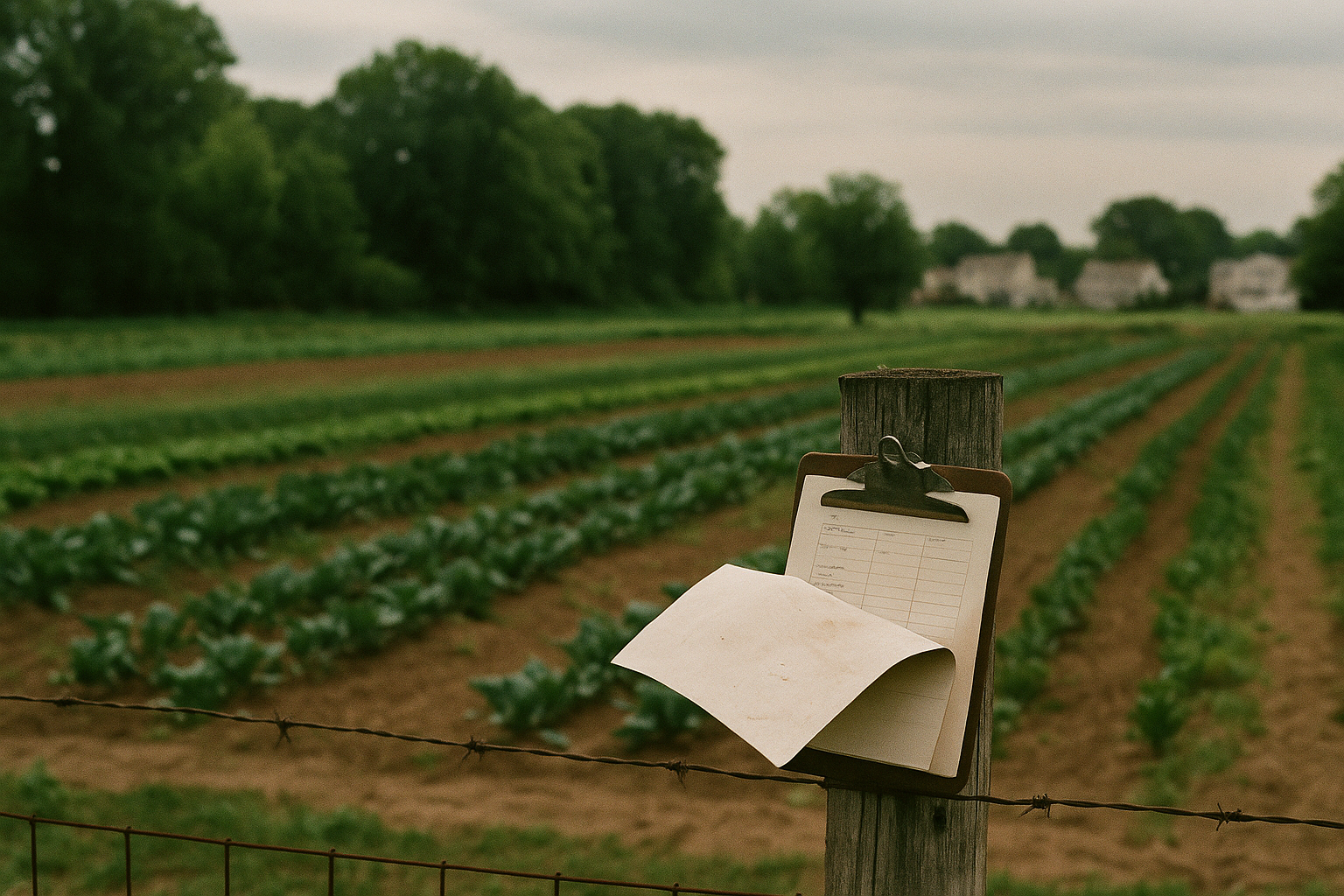
- active agricultural or horticultural use,
- income thresholds or evidence of production,
- filing deadlines and paperwork,
- and sometimes rollback or recapture taxes if the use changes.
That means a parcel can look like farmland without actually qualifying for a tax break under the local rules.
Property-tax breaks are usually about agricultural use, not speculation
States often reduce the taxable value of farmland because the land is being used for production rather than treated like future development land.
Texas, for example, uses agricultural appraisal based on productivity value rather than market value. New Jersey's farmland assessment system works on a similar principle, though the thresholds and forms are different.
That is the pattern to understand: the program is usually rewarding real agricultural use, not simply rural ownership.
Common things buyers miss
Even when a parcel already has favorable tax treatment, buyers still need to verify:
- Whether the current use actually qualifies
- Whether the benefit transfers cleanly after purchase
- Whether annual applications or records are required
- What happens if the land use changes
This last part matters a lot. Some states impose rollback or recapture taxes when qualifying land is converted to non-farm use. New Jersey, for example, warns that rollback taxes can apply for the current year and the two prior tax years if the land use changes.
Federal farm tax treatment is its own topic
On the income-tax side, the IRS treats farming as a real operating activity with its own rules around income, expenses, depreciation, and recordkeeping. That does not mean every “farm idea” automatically qualifies for every tax benefit.
This is why Publication 225 matters. Buyers thinking about market gardens, livestock, orchards, or mixed-use rural property should understand that tax treatment depends on how the operation actually functions and how records are kept.
Practical way to evaluate a tax claim before you buy
If a seller or listing suggests the land carries agricultural tax advantages, do the following:
- Ask which exact program the parcel is under
- Request the current assessment status or supporting records
- Check acreage and income thresholds with the county or state source
- Confirm whether a post-closing application is required
- Ask about rollback or recapture exposure if your intended use changes
In other words, use the agricultural tax breaks guide and your normal due diligence checklist together.
Practical takeaway
Agricultural tax breaks can materially change the cost of owning land, but they are never the first thing to assume. They are something to document.
If the parcel only works financially because you are assuming a tax status you have not verified, the deal is not actually priced right yet.
Want help thinking through farmland assessment, land taxes, or whether a parcel still makes sense if the tax treatment changes? Sign up for LandShop and ask questions in the community. You can compare notes with other buyers and pressure-test the deal before closing.
Sources and further reading
FAQ
Are agricultural tax breaks mostly income-tax or property-tax issues?
Usually both can matter, but they are different questions. Income tax concerns how farm activity is reported, while property-tax programs concern how qualifying land is assessed.
Does a rural parcel automatically qualify for a farmland tax break?
No. Most programs require minimum acreage, active use, income or production thresholds, and annual compliance with local rules.
Why do rollback taxes matter?
Because changing the land use can trigger repayment of prior tax savings in some states. Buyers should understand that risk before they rely on the reduced assessment.
More questions in this topic
Related links
Ask LandShop
Need help applying this to a real parcel?
Bring your actual land, financing, tax, zoning, or build question into the LandShop community and pressure-test the plan before you commit.