What Is Agricultural Classification and Who Qualifies?
Answer-first summary
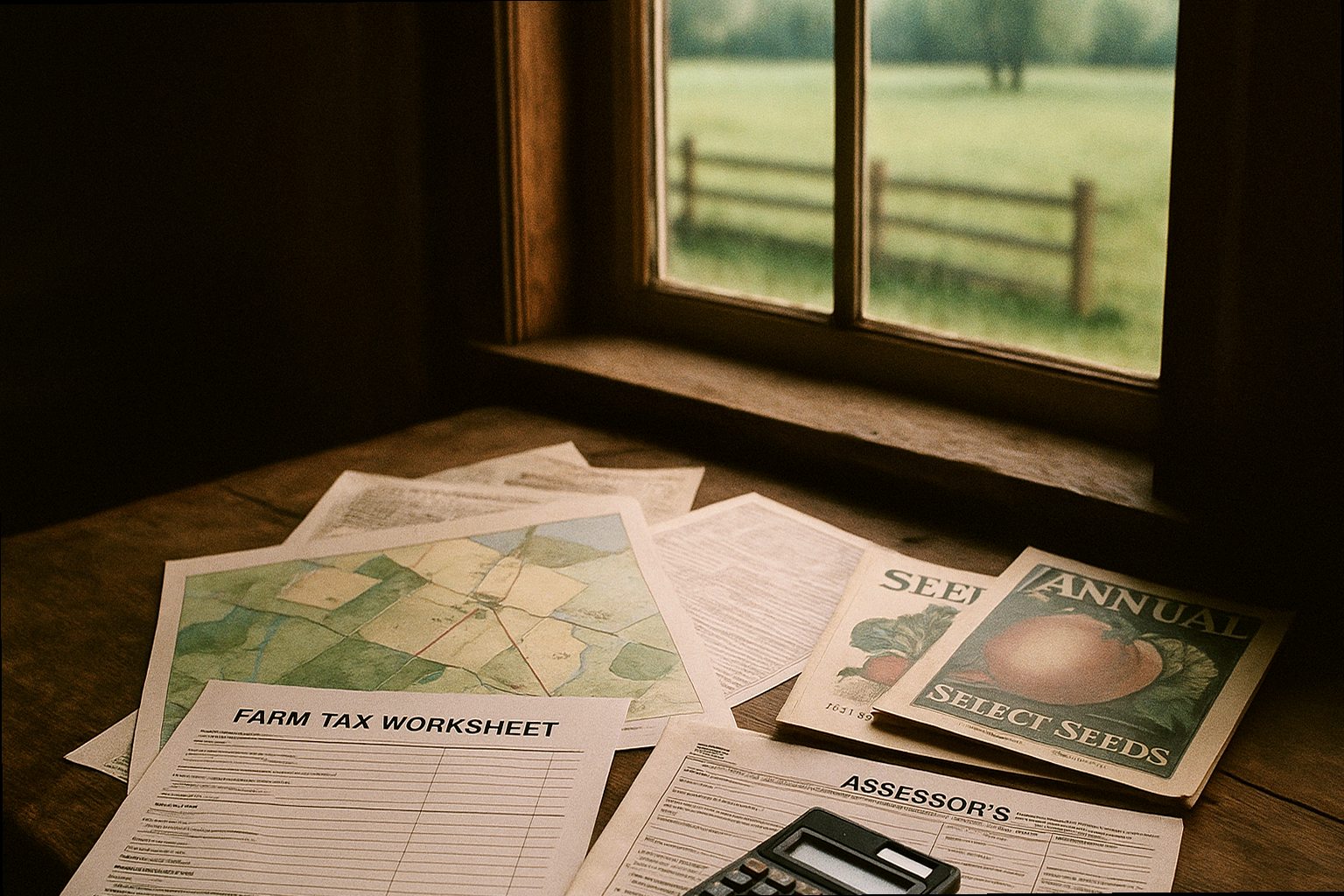
Agricultural classification usually refers to state or local tax treatment that values qualifying land based on agricultural or current use rather than full market value. There is no single national rule for who qualifies. In practice, eligibility often turns on actual agricultural use, use history, acreage or intensity standards, filing deadlines, and whether the owner keeps the land in qualifying use over time.
Agricultural classification is a state and local concept, not one national status
People often talk about “getting ag status” as if there is one nationwide classification you either have or do not have.
That is not how it works.
In practice, agricultural classification is a catch-all phrase for state or local systems that assess qualifying land according to agricultural or current use rather than full market value.
What usually drives qualification
The exact rules vary by jurisdiction, but the recurring drivers are familiar:
- the land has to be in real agricultural use,
- the use often has to be established for a minimum period,
- the parcel may need to meet acreage or intensity standards,
- the owner has to file properly and on time,
- and the land usually has to stay in qualifying use to keep the treatment.
Texas and Georgia show why this is not one universal rule
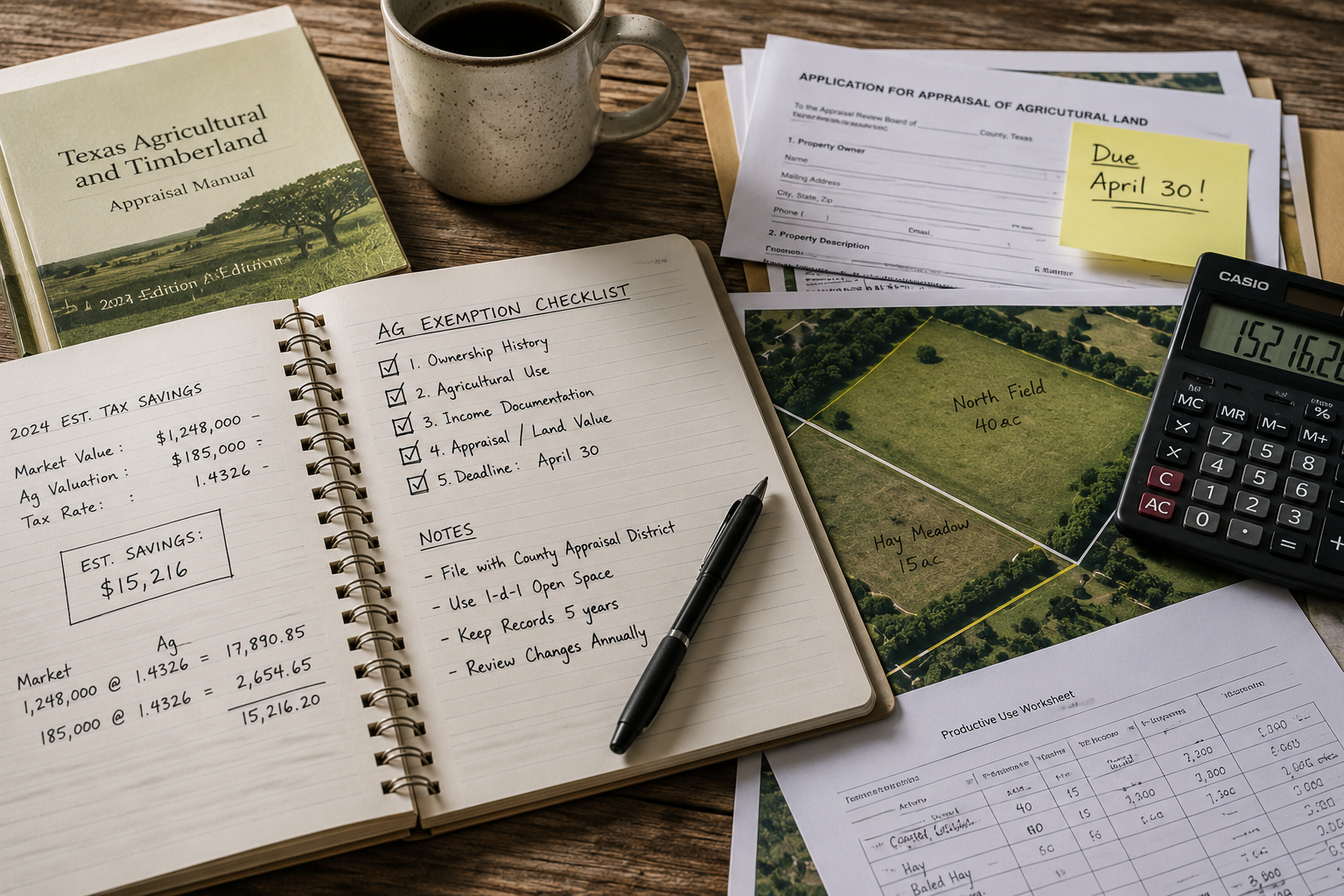
Texas open-space appraisal under Tax Code 1-d-1 generally looks for qualifying agricultural use and, in many cases, a history of that use. County appraisal districts also apply local degree-of-intensity standards.
Georgia’s Conservation Use Value Assessment works differently. It is a covenant-based current-use system that can reduce taxable value but requires owners to stay within the program’s conditions over the covenant term.
Those are both examples of what buyers casually call “ag classification,” but they are not the same program.
Practical takeaway
If you are asking whether land “qualifies for ag,” translate that into a better question:
Which jurisdiction’s agricultural or current-use program applies here, and what exactly does that program require?
That is the question that leads to real answers.
Related questions
- Agricultural Tax Exemptions by State
- How Farm Tax Status Changes Carrying Costs
- What Happens If You Lose Agricultural Tax Status?
Want help translating broad “ag status” language into the actual local program you need to verify? Ask LandShop.
Sources and further reading
FAQ
Is agricultural classification a single federal designation?
No. It is usually a state or local tax-treatment concept, and the rules vary materially from one jurisdiction to another.
Does acreage alone determine qualification?
Usually not. Actual use, use history, intensity standards, filings, and program-specific rules often matter more than acreage by itself.
Why do buyers get confused by ag classification so often?
Because people use the phrase generically even though each state or county may run a different present-use, productivity, covenant, or assessment program.
More questions in this topic
Related links
Ask LandShop
Need help applying this to a real parcel?
Bring your actual land, financing, tax, zoning, or build question into the LandShop community and pressure-test the plan before you commit.