How New Jersey's Farmland Assessment Works
Answer-first summary
New Jersey's farmland assessment program can lower property taxes on qualifying land, but the rules are more specific than many buyers realize. In general, the land must be actively devoted to agricultural or horticultural use, meet the five-acre minimum, satisfy minimum gross-sales thresholds, and be applied for on time. The tax benefit is valuable, but it is not automatic and it does not simply carry forward because a parcel looks rural.
Why New Jersey's farmland assessment matters
In a high-cost state like New Jersey, farmland assessment can materially change the carrying cost of owning productive land. That is why so many buyers hear some version of the same claim:
“Get over five acres and your taxes can drop.”
There is some truth in that, but the real rule set is more specific.
The basic eligibility rule
New Jersey says land generally must be at least five acres and actively devoted to agricultural or horticultural use for the two years immediately preceding the tax year.
That “two years immediately preceding” language matters. This is not a same-season shortcut. New buyers need to understand timing before they assume the benefit will apply right away.
The income thresholds matter too
The acreage threshold by itself is not enough. New Jersey's Division of Taxation explains that qualifying land must generally produce at least $1,000 per year on the first five acres, plus $5 per acre for each additional acre. Woodland under a qualifying woodland management plan uses a different, lower threshold.
This is why people who own rural land in New Jersey sometimes miss the benefit. They may have acreage, but not the right documented activity or sales history.
You still have to apply
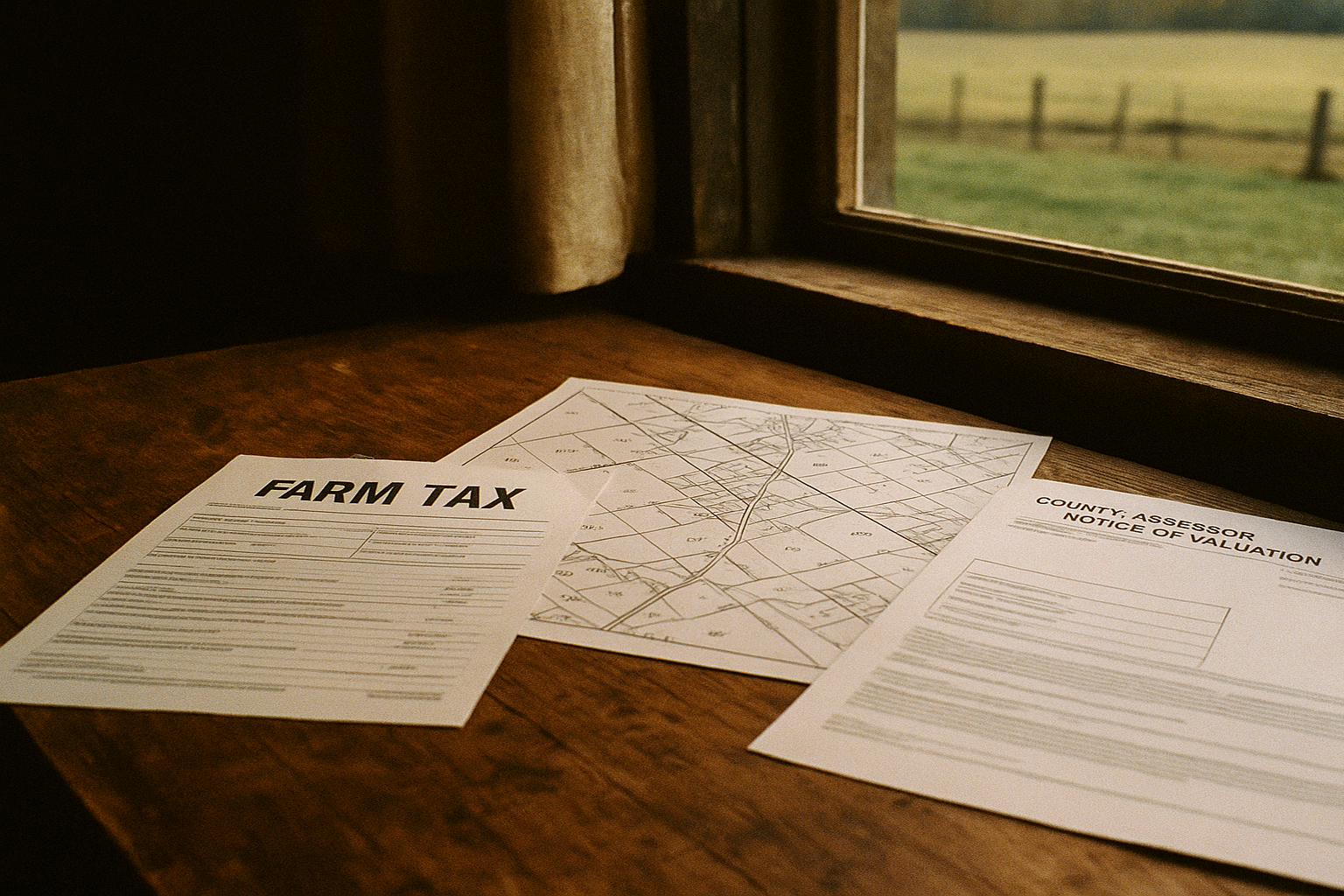
Farmland assessment is not something you assume from the deed. The owner has to file the proper forms.
New Jersey's FA-1 application is filed with the local tax assessor, and the state notes that the normal filing deadline is August 1 of the year immediately preceding the tax year, subject to limited extensions in some cases.
That filing requirement is one of the most important practical points for buyers. A parcel may have previously benefited from farmland assessment, but the continuation of that status depends on proper ongoing compliance.
What buyers often misunderstand
There are four common mistakes:
- Assuming five acres alone is enough
- Assuming the prior owner's status guarantees your future status
- Ignoring the two-year active-use requirement
- Overlooking rollback exposure if the use changes
That last one matters because New Jersey warns that rollback taxes can be assessed when qualifying land is converted away from agricultural or horticultural use.
Why this changes how you shop for land
If you are looking at New Jersey land for a small farm, orchard, market garden, woodland management plan, or mixed-use rural lifestyle, farmland assessment should be part of your due diligence, not just part of the sales pitch.
Check:
- how many acres actually qualify,
- what use has been documented,
- what the recent gross sales or qualifying payments have been,
- whether any forms are missing,
- and how your intended use affects the current status.
Use the farmland taxes FAQ and the agricultural tax breaks guide before you underwrite the property.
Practical takeaway
New Jersey's farmland assessment is powerful, but it is not casual. It rewards real agricultural or horticultural use backed by records, thresholds, and timely filing.
For buyers, that means one thing: verify the program like any other major parcel attribute. If the tax benefit is important to the deal, it needs to be documented before you close.
Want help pressure-testing a New Jersey parcel, especially if the tax treatment is part of the pitch? Sign up for LandShop and ask questions in the community. You can compare notes and get practical feedback before you buy.
Sources and further reading
FAQ
Does New Jersey farmland assessment just mean owning more than five acres?
No. Five acres is only part of the qualification. The land also needs qualifying agricultural or horticultural use, documented income, and proper filing.
Can a buyer assume a New Jersey parcel will automatically keep its farmland assessment?
No. Buyers should verify current compliance, income history, acreage qualification, and filing status rather than assuming the benefit carries forward automatically.
What is a major risk if the land use changes later?
Rollback taxes may apply if qualifying land is converted away from agricultural or horticultural use, so the buyer should understand that exposure in advance.
More questions in this topic
Related links
Ask LandShop
Need help applying this to a real parcel?
Bring your actual land, financing, tax, zoning, or build question into the LandShop community and pressure-test the plan before you commit.