How Farm Tax Status Changes Carrying Costs
Answer-first summary
Farm tax status can materially lower annual carrying costs because qualifying land may be assessed according to agricultural use rather than full market value. But those savings depend on the exact program, the qualifying use, the filing history, and whether the land stays in good standing. Buyers who assume the lower tax number transfers automatically often misunderstand the risk.
Tax treatment can change the carrying cost math
Many buyers focus on purchase price and forget that annual carrying costs shape how long they can comfortably hold a parcel.
Property tax treatment is one of the biggest variables in that equation.
Why the tax number can change so much
When land qualifies for an agricultural or current-use program, the taxable value may be based on agricultural productivity or current use instead of the parcel’s full market value.
That can mean a very different annual tax burden.
But the lower number only matters if:
- the parcel truly qualifies,
- the owner keeps the land in compliance,
- and the jurisdiction does not reset the valuation because use changes or paperwork fails.
Texas and Georgia show the impact clearly
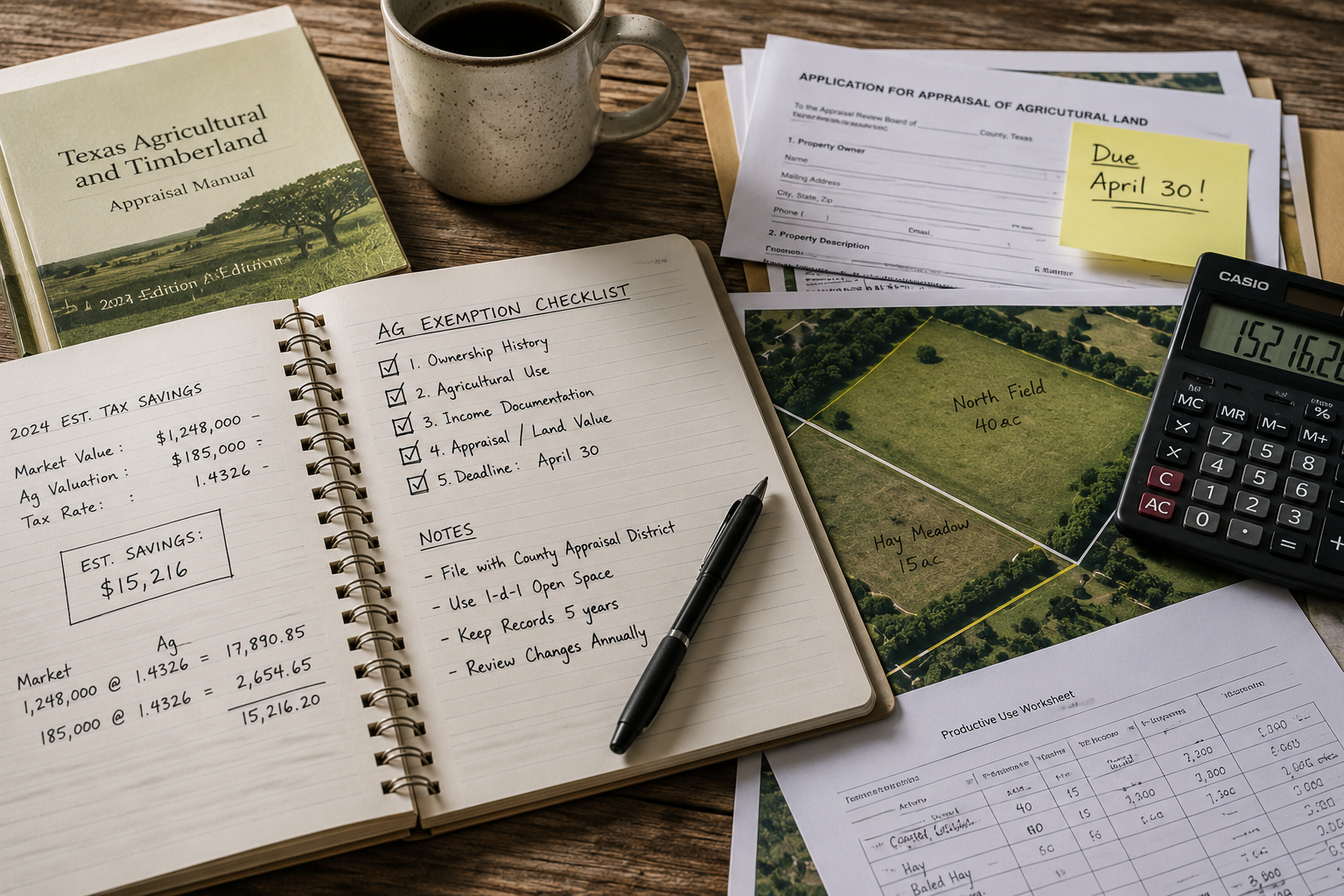
Texas uses productivity-based appraisal concepts for qualifying agricultural land.
Georgia’s Conservation Use Value Assessment is explicitly designed to value qualifying property at current-use value rather than fair market value, subject to its covenant structure.
Different system, same practical lesson: tax treatment can materially change what it costs to carry land each year.
Practical takeaway
If a deal only looks comfortable because the property taxes are low, buyers need to understand *why* they are low and *what would make them change*.
That is where the real carrying-cost analysis starts.
Related questions
- What Is Agricultural Classification and Who Qualifies?
- What Happens If You Lose Agricultural Tax Status?
- Farm Tax & Ag Exemptions Hub
Want help pressure-testing whether a parcel’s low taxes are durable or just conditional? Ask LandShop.
Sources and further reading
FAQ
Why does farm tax status matter so much to carrying costs?
Because qualifying agricultural or current-use treatment can change the assessed value materially, which can lower annual property taxes relative to full market-value assessment.
Do low farm taxes automatically transfer to a new buyer?
Not always. Eligibility, paperwork, use continuity, and jurisdiction-specific rules can all affect whether the treatment continues after a sale or change in use.
What is the biggest mistake buyers make here?
They treat the current tax bill as a permanent number instead of asking what program created it and what would make that number reset or increase.
More questions in this topic
Ask LandShop
Need help applying this to a real parcel?
Bring your actual land, financing, tax, zoning, or build question into the LandShop community and pressure-test the plan before you commit.