How to Build a Barndominium in Phases
Answer-first summary
A phased barndominium build works best when the whole project is planned up front even if the spending happens in stages. Buyers who treat the shell, utilities, living area, and work area as one coordinated plan usually stay more flexible than buyers who improvise their way into expensive rework. The goal is not to half-finish a building forever. It is to sequence the project intelligently so each stage still adds lasting value.
Phasing only works if the whole plan exists first
People like the idea of a phased barndominium because it sounds like a way to spread out spending.
That part is true. The dangerous part is when buyers treat phasing as improvisation.
If the finished layout, utility plan, slab design, and approval path are not clear from the start, early “savings” can turn into expensive rework later.
The first phase is not the first pour
The first phase is site planning:
- confirm zoning and approval path,
- confirm access and utility feasibility,
- decide how much of the building is shop, living space, storage, or business use,
- and map the final footprint before you start shrinking or enlarging pieces.
That is why How to Build a Homestead in Phases is still relevant here. Sequencing matters more than speed.
Common phase patterns that actually make sense
One practical pattern is:
- land and approvals first,
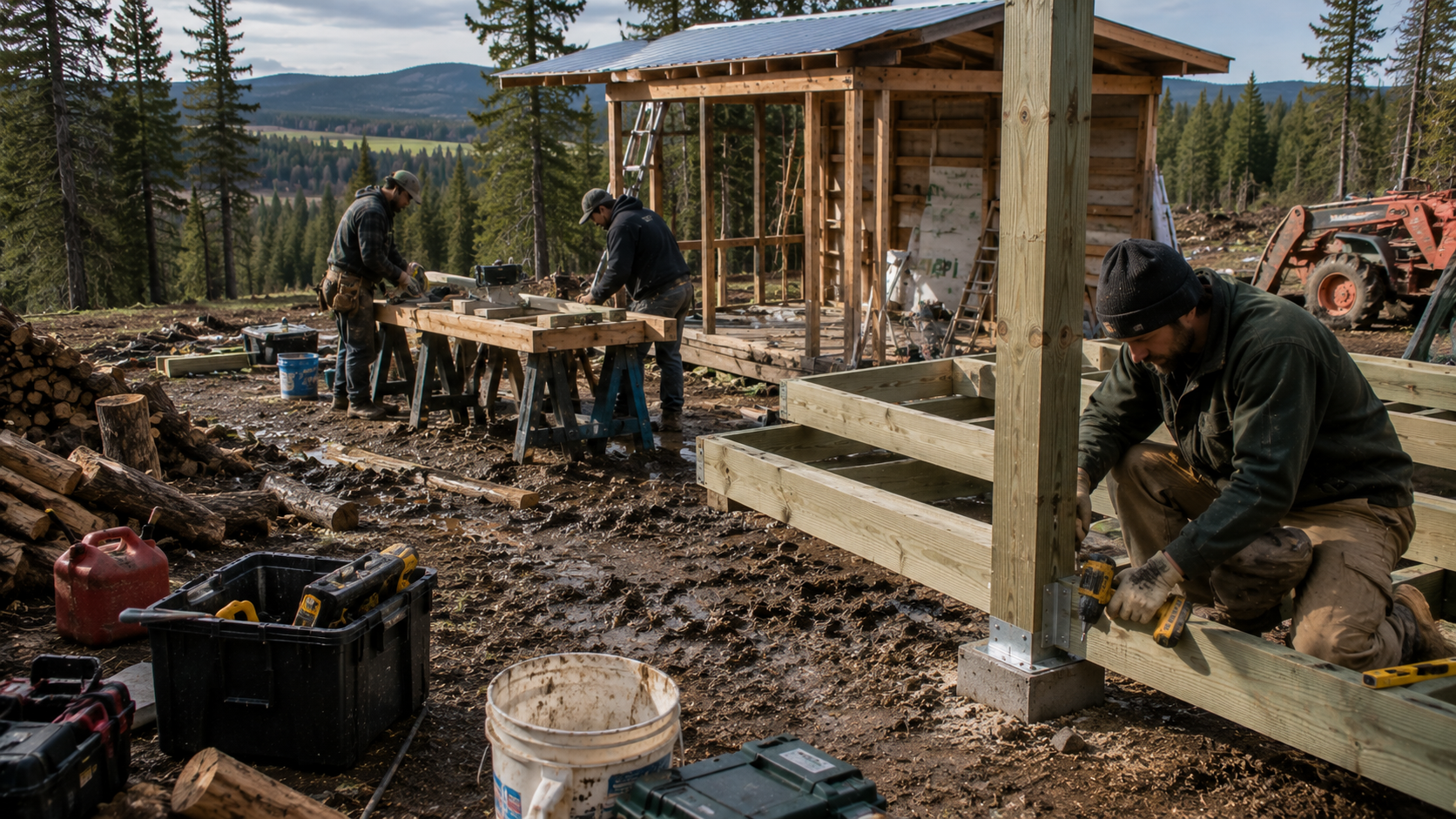
- shell and slab second,
- essential utilities third,
- core living space fourth,
- secondary work or storage fit-out later.
Another pattern is a live-work shell where the first finished zone is modest residential space and the rest stays unfinished until the budget catches up.
Either way, the entire project should already know where plumbing, power, insulation, ventilation, and future separations will go.
What not to fake
The fastest way to make a phased build expensive is to fake permanence where there is none.
That includes:
- temporary layouts that block the real plumbing plan,
- slab decisions that do not match the final interior,
- undersized service for future loads,
- or pretending the county will quietly ignore how the building is actually being used.
Phasing works when the unfinished parts are intentional, not accidental.
The land still controls the pace
Barndominiums get talked about like shell-first projects, but the land keeps setting the schedule. Septic, well, driveway, drainage, and service entrance can still dominate the early budget.
That is why phased building pairs naturally with How to Buy Land on a Tight Budget and Cheapest Ways to Live on Land. The structure is only one piece of the entry strategy.
Practical takeaway
The right way to phase a barndominium is not to guess your way through it. It is to lock the full plan early, then spend in a sequence that keeps the finished project buildable, legal, and useful at every stage.
Sources and further reading
FAQ
Can you build a barndominium in stages?
Yes, but only if the full layout, utility plan, and approval path are coordinated from the start. Unplanned phasing often creates expensive rework.
What usually comes first in a phased barndominium build?
Land due diligence, approvals, utility planning, and the final building concept should come before the shell and interior sequence.
Does phasing always save money?
Not automatically. It mainly improves cash-flow flexibility. It only saves money if each stage is planned so future work does not undo earlier work.
More questions in this topic
Related links
Ask LandShop
Need help applying this to a real parcel?
Bring your actual land, financing, tax, zoning, or build question into the LandShop community and pressure-test the plan before you commit.