How Much Do You Need Down to Buy Land?
Answer-first summary
There is no single down-payment rule for land. Seller-financed deals, raw-land bank loans, USDA farm programs, and phased purchase strategies all ask for different levels of cash up front. The smarter question is not just how little you can put down, but how much cash you need to close, carry, and improve the parcel without forcing the whole plan to break.
There is no one land down-payment number
People often ask for a simple number because the housing world trains them to think in mortgage buckets.
Land does not work that neatly.
The amount you need down usually changes based on:
- whether the seller is financing the deal,
- whether a bank is underwriting raw land only,
- whether the purchase is tied to an agricultural use case,
- and whether you are buying the whole plan at once or in stages.
That is why buyers should start in the Land Financing Hub, not with a random internet number.
The down payment is only part of the cash problem
Even when a lender or seller is flexible, you still need cash for the rest of the real project:
- due diligence,
- closing costs,
- site visits,
- surveys or soil work,
- and the first round of carrying costs after closing.
That is why a “small down payment” can still become a bad deal if it leaves you with no room for access, septic, driveway, or tax surprises.
Different land paths ask for different cash
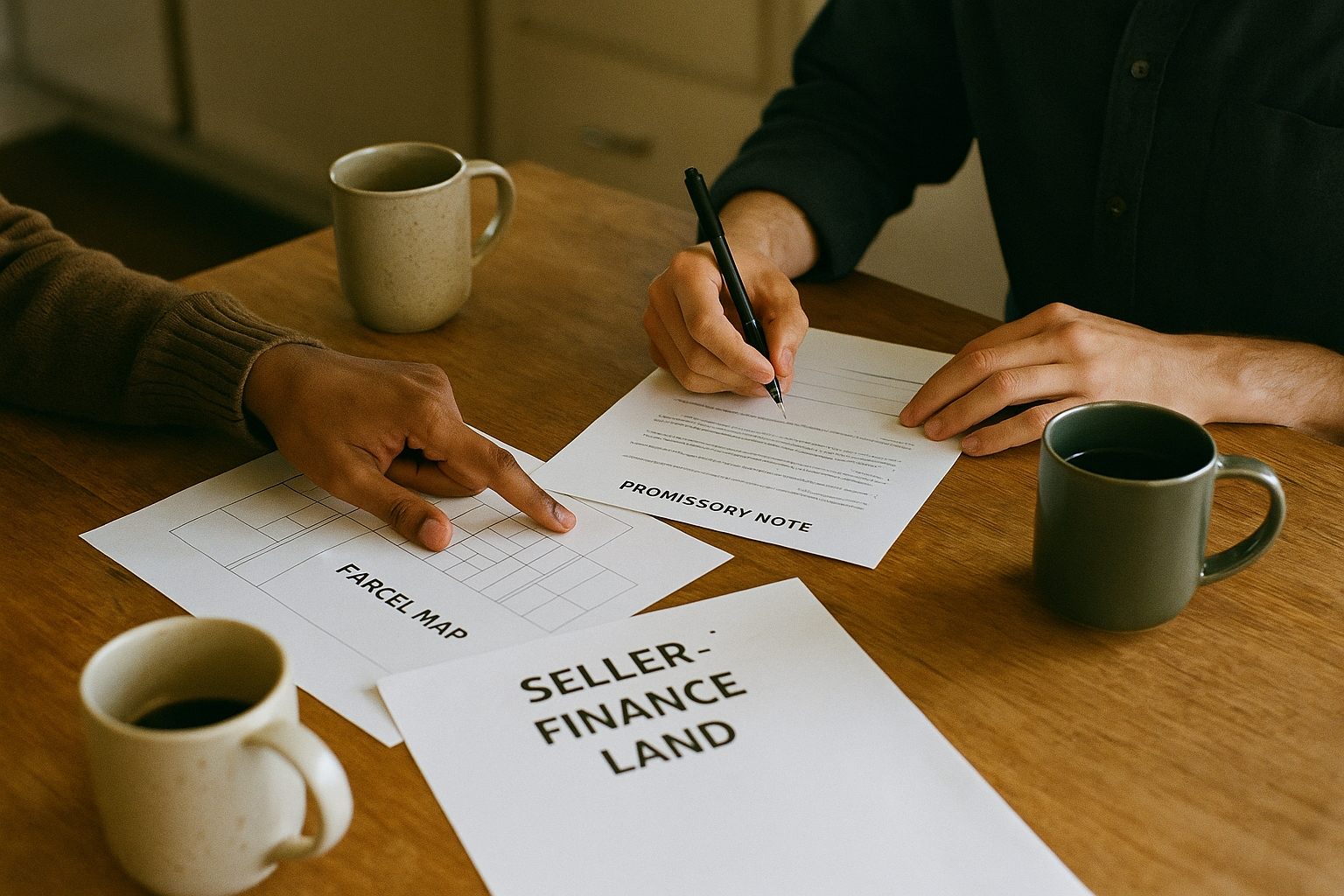
Owner financing is often the most flexible path because the seller can decide how much cash they want up front and how the note gets structured. That is one reason What Is Owner Financing for Land? matters so much for budget-first buyers.
USDA farm-loan programs are different again. They are purpose-built programs with their own eligibility rules, and some beginning-farmer programs specifically contemplate a buyer cash contribution rather than a conventional mortgage-style structure.
Commercial raw-land loans can be stricter because the lender is underwriting dirt, not a finished house.
The better way to lower your down payment is to change the deal
If the required cash feels too high, the cleanest fixes are usually:
- look at a cheaper parcel,
- widen the search radius,
- buy fewer acres first,
- use owner financing where the terms are workable,
- or phase the project instead of financing every future step on day one.
That is usually more realistic than forcing one expensive parcel to fit a thin budget.
Practical takeaway
Ask two questions at the same time:
- how much do I need to close?
- how much do I need to stay stable after I close?
If the answer to the second question is shaky, the parcel is still too expensive even if the down payment looks manageable on paper.
For the next decision in this lane, read How Land Loans Actually Work, How to Buy Land in Phases Without Overcommitting, and How to Buy Land on a Tight Budget.
Sources and further reading
FAQ
Is there a standard down payment for land?
No. Land down payments vary a lot depending on whether the deal is seller-financed, bank-financed, tied to agricultural use, or part of a staged plan.
Why can a low down payment still be risky?
Because closing is not the whole budget. Buyers still need cash for due diligence, closing costs, taxes, and the first round of improvement or carrying expenses.
What is the cleanest way to reduce the cash needed up front?
Usually by changing the parcel, acreage, location, or deal structure rather than trying to force one expensive property to fit a thin budget.
More questions in this topic
Related links
Ask LandShop
Need help applying this to a real parcel?
Bring your actual land, financing, tax, zoning, or build question into the LandShop community and pressure-test the plan before you commit.