How Land Loans Actually Work
Answer-first summary
Land loans are usually less standardized than home mortgages because the collateral is the land itself, not a finished house. That means lenders pay close attention to access, utilities, use, acreage, improvements, and the buyer's plan for the property. For LandShop readers, the key is to match the financing path to the land type instead of assuming every parcel can be financed the same way.
A land loan is not just a home mortgage without the house
One reason rural buyers get frustrated is that they assume financing will work like a suburban home purchase. Usually it does not.
With land, the lender is evaluating the parcel itself much more directly. There may be no finished home, no completed utility setup, and no immediate resale market that looks anything like a standard residential neighborhood. That makes the underwriting more specific.
The lender will usually want to understand:
- what kind of land it is,
- what you plan to do with it,
- whether it has legal access,
- whether utilities or improvements exist,
- and how strong the collateral really is if they ever need to take it back.
Think in land-loan categories, not one generic product
“Land loan” is a broad phrase. In practice, buyers usually run into a few different financing buckets.
Raw land or unimproved land
This is the hardest category because the parcel may not yet have utilities, site work, or a ready-to-build path. The more uncertainty around the land, the tighter the underwriting tends to become.
Improved lot or homesite financing
If the parcel already has stronger access, utilities, and a clearer build path, the deal may be easier to finance than raw land. The parcel looks more predictable.
Farm ownership financing
If the land is part of an agricultural operation or beginning-farmer plan, USDA Farm Service Agency programs may apply. FSA says farm ownership loans can be used to purchase or enlarge a farm, improve farm buildings, and support soil and water conservation work.
Build-related financing
Some buyers treat the land as only phase one and plan for construction later. That means the financing discussion should include not only the parcel itself but whether the land can transition cleanly into a future build plan.
What lenders usually care about most
No matter which path you use, a few issues come up again and again.
1. Access
A parcel without clean legal access is much harder to finance. If a lender cannot clearly understand how the property is reached and used, that uncertainty affects the deal.
2. Use
Is this recreational land, a future homesite, small farmland, timber land, or a speculative parcel? Use changes risk.
3. Utilities and improvements
Water, septic feasibility, electric access, road quality, and site readiness all help the lender understand how usable the land actually is.
4. Down payment and borrower strength
Because land is often viewed as riskier than a finished home, buyers should expect the financing conversation to be shaped by cash position and the quality of the parcel itself.
USDA programs matter more than many rural buyers realize
For buyers pursuing agricultural use, USDA programs can be a meaningful part of the financing conversation.
FSA explains in its farm loans guide (PDF) that farm ownership financing can come through direct and guaranteed structures. USDA also provides targeted support for beginning farmers and ranchers, which is relevant for buyers trying to acquire land for an actual operating use rather than simple speculation.
That does not mean every parcel qualifies. It means serious rural buyers should not ignore FSA, especially if the land is part of a farm or food-production plan.
Financing should follow the land, not the other way around
One of the most common mistakes is shopping loans before defining the land use clearly enough.
Instead, start here:
- What is the land for?
- What is phase one?
- What level of access and utilities are required immediately?
- Is the parcel agricultural, residential, recreational, or mixed-use?
- Which financing path best matches that reality?
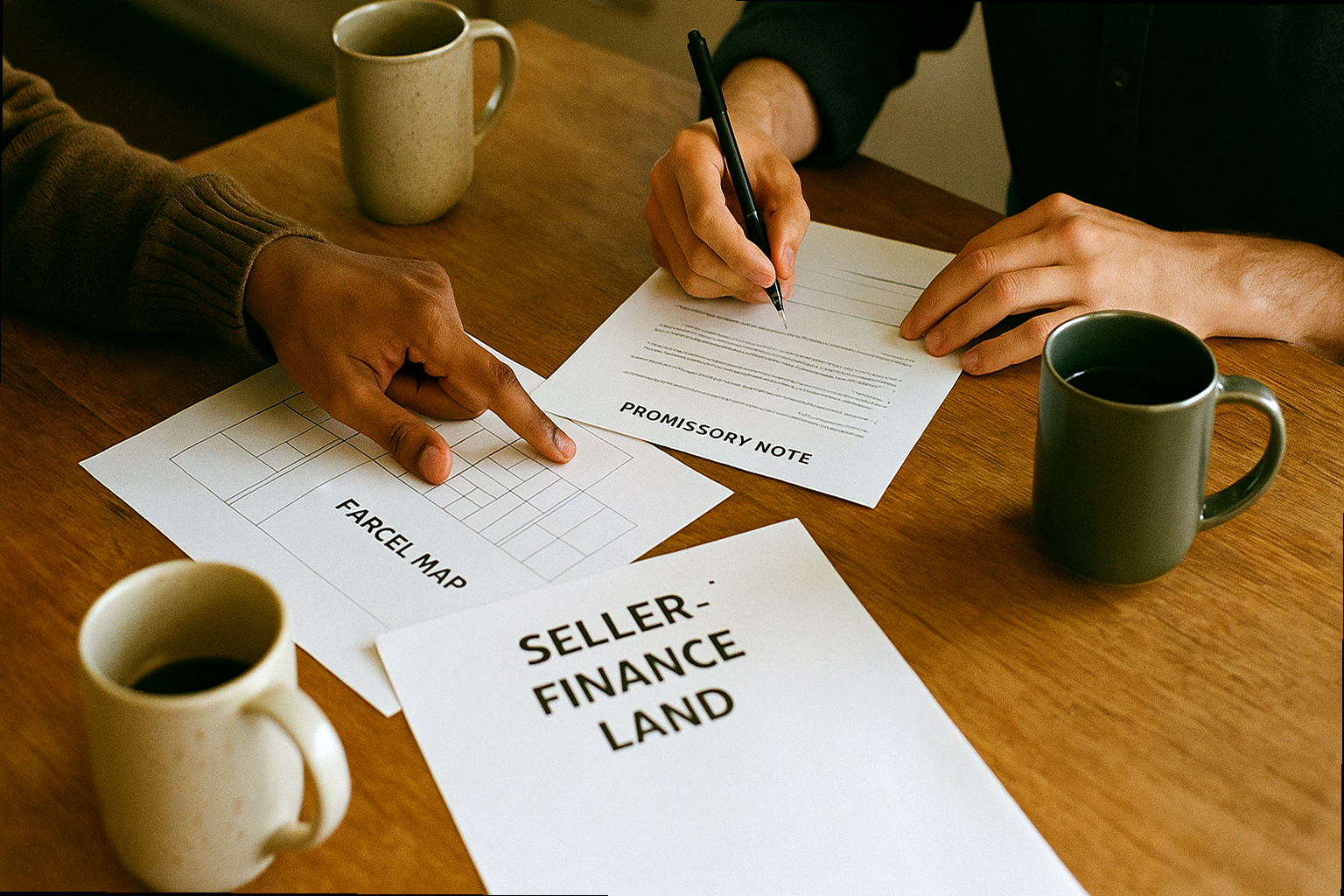
This is where owner financing can sometimes be useful too. If a conventional lender does not like the parcel, a seller-financed path may work, but only if the contract is clean and the land still passes your own due diligence.
The loan is only part of the decision
Even a strong loan does not fix a weak parcel.
Use the land loan guide, the due diligence checklist, and the buying land checklist together. Financing should confirm a good land decision, not rescue a bad one.
Practical takeaway
Land loans work best when the buyer is clear, the parcel is understandable, and the use case is real. The more ambiguity around the land, the more cautious the financing path becomes.
Want help pressure-testing a parcel before you apply for financing? Sign up for LandShop and ask questions in the community. You can compare loan paths, deal structures, and first-phase land plans before you commit.
Sources and further reading
FAQ
Why are land loans different from home loans?
Because the lender is evaluating the land itself much more directly. There may be no house, no utilities, and no standard residential resale market to rely on.
What can make a land loan harder to get?
Weak access, unclear use, limited utilities, heavy improvement needs, and a parcel that is difficult to value or resell can all make financing more difficult.
When should a buyer look at USDA land-related loan options?
When the purchase is tied to agricultural use, especially for farm ownership or beginning-farmer plans. USDA programs are not universal, but they are highly relevant for qualifying buyers and parcels.
More questions in this topic
Related links
Ask LandShop
Need help applying this to a real parcel?
Bring your actual land, financing, tax, zoning, or build question into the LandShop community and pressure-test the plan before you commit.