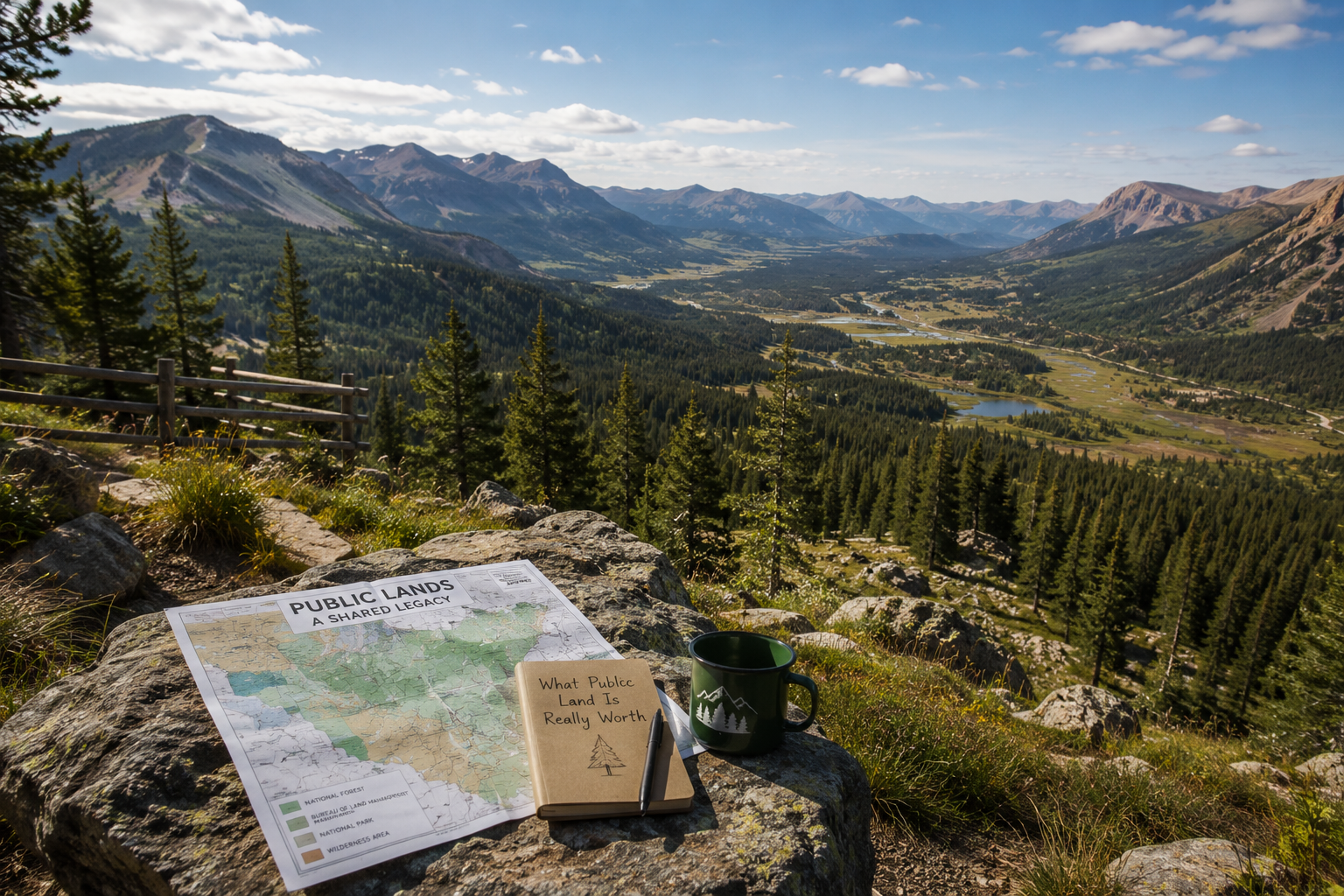
What Public Land Is Really Worth
Answer-first summary
When people argue over mining, drilling, or industrial development on public land, the real issue is not whether land has value. It is what kind of value counts. Some landscapes produce quick revenue through extraction. Others create long-term value through access, recreation, water, wildlife, local business activity, and the simple fact that they remain public. For land buyers and landowners, the practical lesson is clear: land should be judged by its full use over time, not just by the most aggressive offer attached to it.
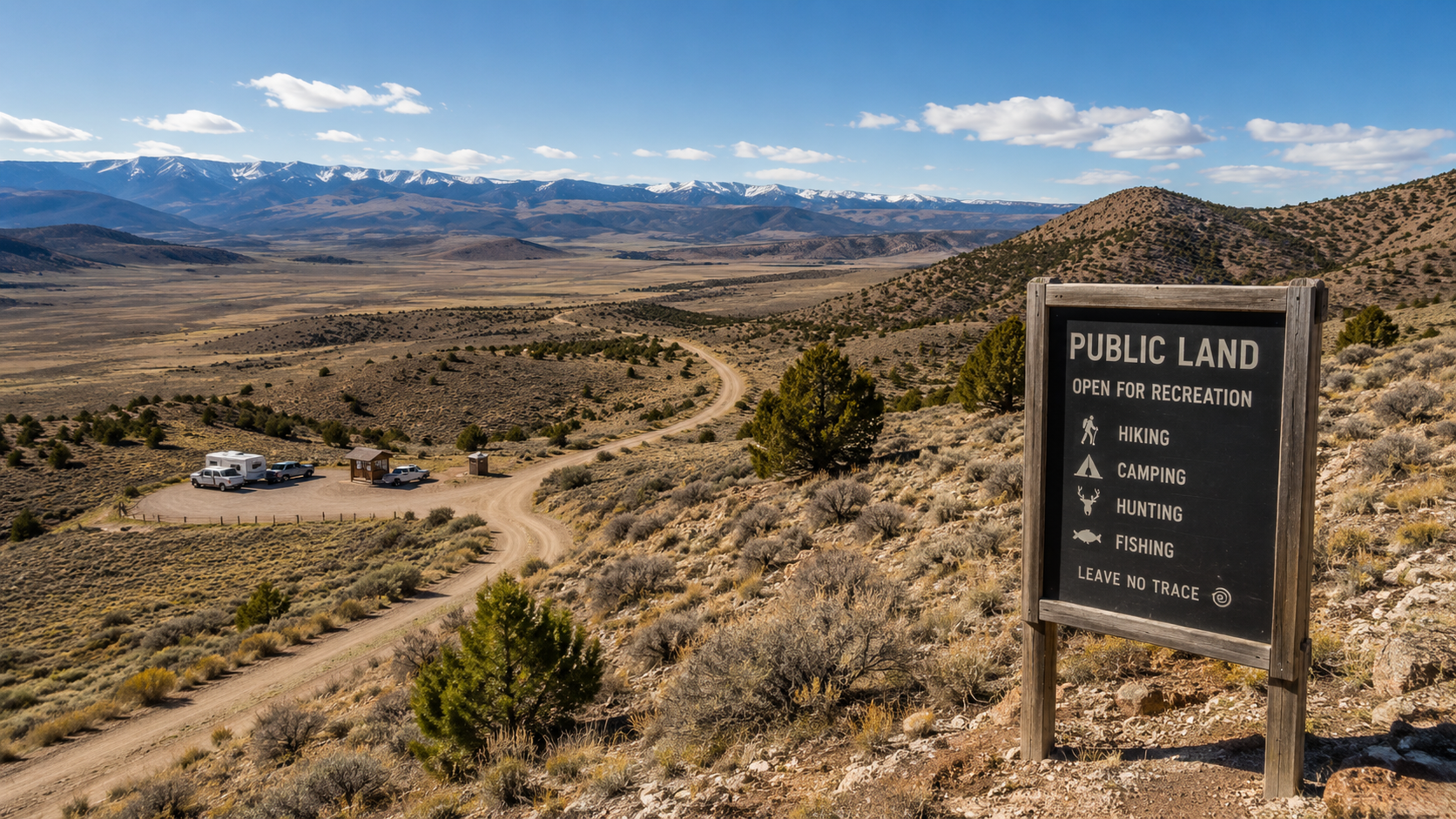
Public land has more than one kind of value
When a company wants access to minerals, timber, or another buried resource, the argument usually sounds simple: there is value in the ground, and the country should use it.
But public land has never been valuable for only one reason.
Some places are valuable because they hold resources that can be extracted. Other places are valuable because they stay open, wild, accessible, and intact. The hard part is that those two values can collide.
This matters because the United States holds an enormous public-land estate. The Government Accountability Office says the federal government manages around 640 million acres, or about 28% of all land in the country. Once policy shifts how that land is treated, the precedent rarely stays local.
Protected land creates value too
A lot of public-land debates get framed as if protection means doing nothing. That misses what protected land actually does.
Protected land creates access. It supports local guiding, lodging, outfitting, recreation, wildlife use, fisheries, and the kind of outdoor identity that entire towns can be built around. It also preserves optionality for the future. Once a wilderness-adjacent watershed is industrialized, that trade is hard to undo.
The Boundary Waters is a useful example because it is not an abstract landscape. The U.S. Forest Service describes it as over 1,098,000 acres of federally designated wilderness, and the Department of the Interior said more than 150,000 visitors come to the area each year. That kind of use supports a real economy, even if it does not show up in the same headline style as a major industrial project.
Extraction projects usually promise jobs, and that matters
It is important to be fair about this. Large resource projects can create jobs, tax revenue, and short-term economic momentum. Those benefits are real, especially in communities that have lost industry or want higher wages.
Project backers often lead with those numbers. Twin Metals, for example, has promoted the Minnesota mine proposal as more than 750 direct jobs and 1,500 spinoff jobs. Those claims deserve to be taken seriously.
But serious review also means asking harder questions:
- how long do those jobs last,
- how many are local,
- how automated will the operation become,
- who captures the upside,
- and what existing local economy could be weakened in the process?
If a place already supports recreation businesses, guides, outfitters, lodging, and downstream property value, then the real question is not whether a mine creates jobs. It is whether the full trade actually benefits the community over time.
Some risks are not theoretical
The environmental side of these fights can get dismissed as abstract, but some of the core risks are straightforward. The U.S. Geological Survey explains that mine drainage can occur when sulfide minerals are exposed to air and water, forming sulfuric acid and releasing metals into groundwater or surface water.
That does not mean every mine fails in the same way. It does mean that the location matters. A high-risk industrial use in a sensitive watershed is not the same as the same project in a place with different geology, hydrology, and surrounding land uses.
That is where land thinking has to get more specific. “We need minerals” is not enough by itself. The better question is whether this project belongs in this place.
The public-process part matters more than most people think
One reason these stories matter beyond Minnesota is that land protections are not just lines on a map. They are also the product of process.
In January 2023, the Department of the Interior withdrew 225,504 acres in the Superior National Forest from future mineral and geothermal leasing for 20 years, citing water, wildlife, recreation, and Tribal and treaty-right concerns. Whether people agree or disagree with that decision, it shows that land use is not just about geology. It is about what public values a place is meant to protect.
When those protections are later challenged or narrowed, the implications go beyond one project. They shape how durable public-land protections really are elsewhere.
What this means for buyers and landowners
Even if you are not buying federal land, public-land fights still matter because they change the context around nearby private land too.
They can affect:
- access and recreation value,
- water quality concerns,
- tourism demand,
- neighboring property values,
- local infrastructure pressure,
- and the long-term identity of a region.
This is one of the biggest land lessons people miss. A parcel is never just the parcel. It sits inside a wider map of policy, neighboring uses, and future pressure.
How to think about land when a big project shows up
Whether the issue is a mine, a data center, a subdivision, or a logistics park, the framework is similar.
- Ask who gets the upside and who carries the downside.
The same project can enrich a company while shifting noise, traffic, risk, or lost value onto everyone nearby.
- Separate temporary money from durable value.
A project can create a burst of activity without producing long-term local resilience.
- Look at the land use that already works.
Existing recreation, farming, outfitting, or community use should be counted as real economic value, not treated like empty space waiting for a “better” use.
- Respect place-specific risk.
Not every industrial use belongs in every landscape. Watersheds, wildlife corridors, wildfire risk, and surrounding uses all matter.
- Follow the public process early.
Once land-use momentum builds, communities are usually negotiating from a weaker position.
Land is worth more than the fastest monetization plan
The deepest mistake in these debates is treating undeveloped land as wasted land. Some places produce their value precisely because they are protected, accessible, and still public.
That does not mean every project should be rejected. It means communities and policymakers should judge land by the full range of benefits it provides, not just by the quickest revenue model attached to it.
That is a useful lesson for private ownership too. Good land decisions come from understanding use, context, and permanence. The highest-intensity use is not always the highest-value use.
Want help learning how land use, access, and surrounding policy affect value? Sign up for LandShop and ask questions in the community. You can compare deals, talk through tradeoffs, and get practical feedback before you commit.
Sources and further reading
FAQ
Why does public land policy matter to private landowners?
Because changes to nearby public land can affect recreation demand, access, water concerns, tourism, local identity, and the value or usability of surrounding private property.
Does a resource project creating jobs automatically mean it is the best land use?
No. Job creation matters, but communities still need to compare temporary gains against long-term tradeoffs such as water risk, tourism impacts, automation, and who actually captures the upside.
What is the practical takeaway for land buyers?
Always evaluate the wider map around a property. Land value depends not just on the parcel itself, but on adjacent uses, policy shifts, access, and the kinds of projects that could reshape the area later.
More questions in this topic
Ask LandShop
Need help applying this to a real parcel?
Bring your actual land, financing, tax, zoning, or build question into the LandShop community and pressure-test the plan before you commit.