When Data Centers Target Farmland
Answer-first summary
Data centers are becoming a bigger rural land issue because they need large sites, reliable power, and in many cases substantial cooling water. That does not mean every project is automatically bad, but it does mean farmland owners and local communities need to ask harder questions before approvals are granted. The practical issue is not just development. It is whether a project protects water, pays its own infrastructure costs, and fits the long-term use of the land around it.
Why rural communities are seeing more of these projects
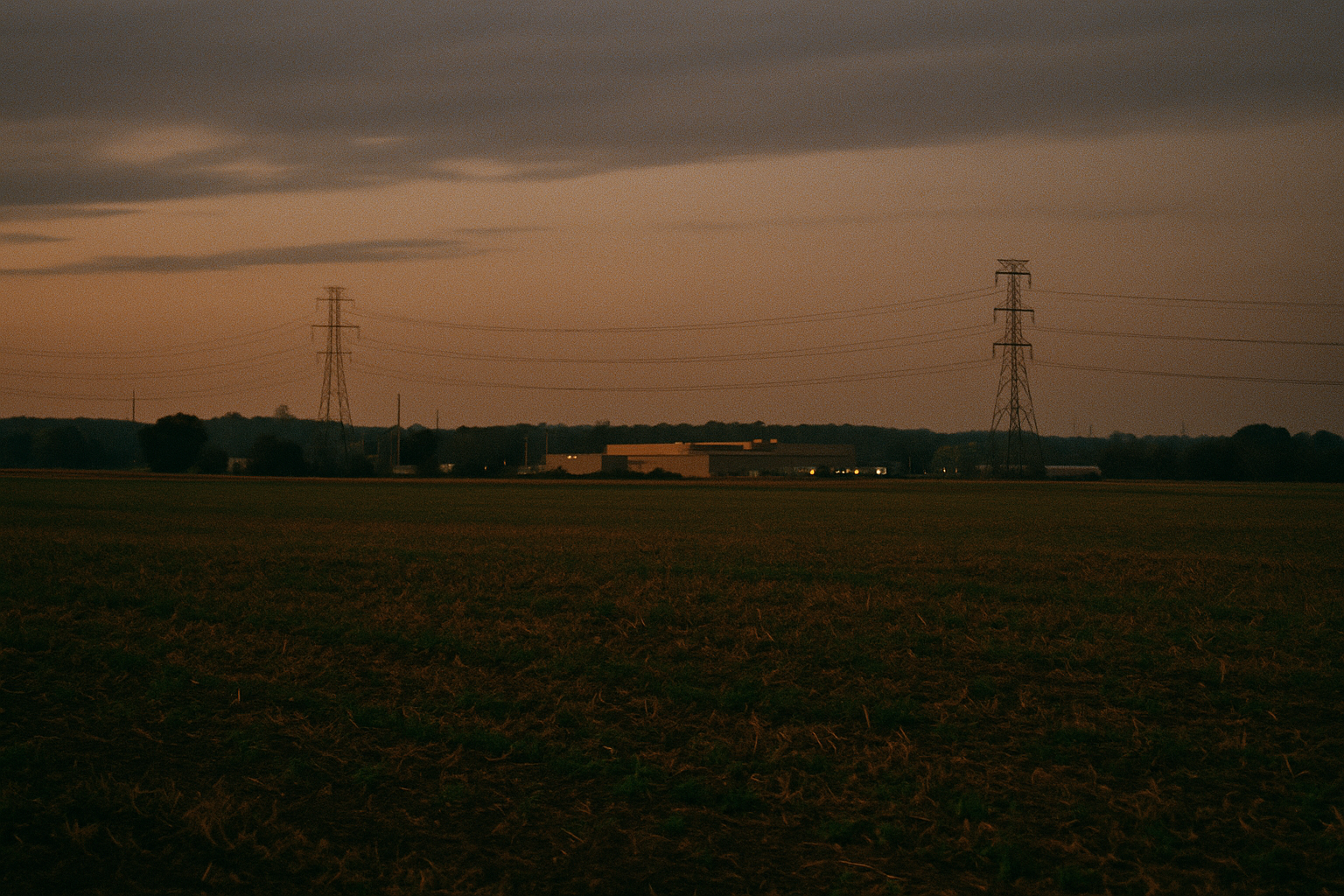
Large data centers need three things at once: land, power, and cooling. Rural areas often look attractive because they can offer big sites, lower land costs, easier entitlement paths, and access to transmission or utility expansion.
That matters more now because the scale of demand is changing fast. The U.S. Department of Energy said data centers used about 176 TWh of electricity in 2023, or roughly 4.4% of total U.S. electricity, and could rise to 6.7% to 12% by 2028.
When electricity demand jumps that quickly, the land around substations, transmission corridors, and utility-ready greenfield sites becomes more valuable to developers. In many counties, that means farmland is suddenly in the conversation.
Water is often the first practical concern
Not every data center uses water the same way, but many facilities rely on water-intensive cooling systems, especially in hotter climates or denser campuses. That is why local water questions matter so much.
The U.S. Environmental Protection Agency now specifically points to data centers as a reason many communities are looking harder at water reuse. EPA says that recycled water-based cooling can reduce strain on local water supplies and highlights reuse as one of the practical tools available to reduce pressure on potable systems.
That is the key point for landowners: the issue is not only how much water a project says it will use. It is what kind of water it plans to use, whether it is drawing from potable supply, and whether the cooling design is the least damaging option for the area.
Farmland pressure is not just about the building footprint
When people hear about a data center, they often picture one box on one parcel. In reality, the footprint can ripple much farther.
Projects can affect:
- land prices around the site,
- nearby utility infrastructure,
- water planning,
- road and truck traffic,
- and the future zoning expectations of neighboring parcels.
That matters because the broader loss of agricultural land is already real. American Farmland Trust estimates the country lost or compromised more than 20 million acres of agricultural land between 2001 and 2016. Data centers are only one part of that story, but they are part of a larger pattern where productive land keeps getting pulled into non-farm uses.
Lower-impact options do exist
One of the most important things rural communities should know is that operators do have options beyond the cheapest standard approach.
EPA’s water reuse guidance makes clear that non-potable and recycled water strategies are viable in the right systems. EPA’s Quincy, Washington case study shows how cooling-water recycling and treated municipal wastewater reuse can reduce dependence on potable groundwater supplies.
The Department of Energy is also openly promoting alternatives that reduce grid strain and improve reliability. DOE notes that geothermal can help support both data center power needs and cooling demand.
The practical takeaway is straightforward: if a developer claims a water-intensive or infrastructure-heavy design is the only option, that should be treated as a business preference, not automatically as a technical fact.
The right question is whether the project fits this place
Land decisions are always local. A project that might be workable in one county may be a bad fit in another because of aquifer stress, agricultural dependence, weak grid capacity, or the kinds of businesses already operating nearby.
This is why the most useful question is not “Are data centers good or bad?”
It is:
“Does this project belong on this land, with this water supply, on this utility system, and under these local rules?”
That question forces a more honest review of tradeoffs.
What rural landowners and buyers should verify
If a data center project is proposed near land you own or are considering buying, do not stop at the headline investment number.
Check:
- Water source and cooling method.
Is the project relying on potable water, recycled water, or another source? How much daily demand is projected?
- Utility and transmission impacts.
Will the site require major upgrades that could change reliability, cost allocation, or the character of surrounding land?
- Zoning and future land use.
Does approval for one campus make adjacent farmland more vulnerable to industrial rezoning later?
- Tax structure and incentives.
Are local taxpayers covering infrastructure while the operator receives abatements or exemptions?
- Long-term compatibility.
Does the project reinforce the local economy, or does it conflict with farming, recreation, water use, or the county's stated land goals?
A slower process is often the smarter process
Communities do not need to say yes or no instantly. In many cases, the smartest move is to slow the clock and force clearer answers first.
That can mean:
- pausing approvals while standards are written,
- requiring detailed water and infrastructure disclosures,
- separating potable-water use from recycled-water proposals,
- and making developers show exactly who pays for expansion costs.
That is not anti-growth. It is basic land stewardship.
Good land policy protects optionality
Farmland does more than sit empty waiting for a “higher” use. It produces food, supports local businesses, preserves open space, and gives communities future options.
If a county converts productive ground into an infrastructure-heavy industrial use without understanding the water, power, and land tradeoffs, it may be giving up more than it realizes.
That is the real lesson here. Data center growth is real. So are the land pressures that come with it. Rural communities need to evaluate these projects as land-use decisions, not just as tech announcements.
Want help evaluating how infrastructure, zoning, and neighboring uses could affect a land deal? Sign up for LandShop and ask questions in the community. You can compare notes, pressure-test assumptions, and get practical feedback before you commit.
Sources and further reading
FAQ
Are data centers always bad for farmland?
No. The issue is not the label alone. The real question is whether the project fits the site, protects water, pays for its infrastructure needs, and avoids pushing long-term costs onto surrounding landowners.
Why does cooling method matter so much?
Because cooling design affects how much water a facility uses and whether it relies on potable supply, recycled water, or another lower-impact approach. That directly affects local water stress.
What should I check if I own land near a proposed data center?
Review the projected water demand, utility expansion, zoning implications, tax incentives, and whether the project could change the long-term development pattern around your property.
More questions in this topic
Related links
Ask LandShop
Need help applying this to a real parcel?
Bring your actual land, financing, tax, zoning, or build question into the LandShop community and pressure-test the plan before you commit.