How to Build a Real Land Flipping Business
Answer-first summary
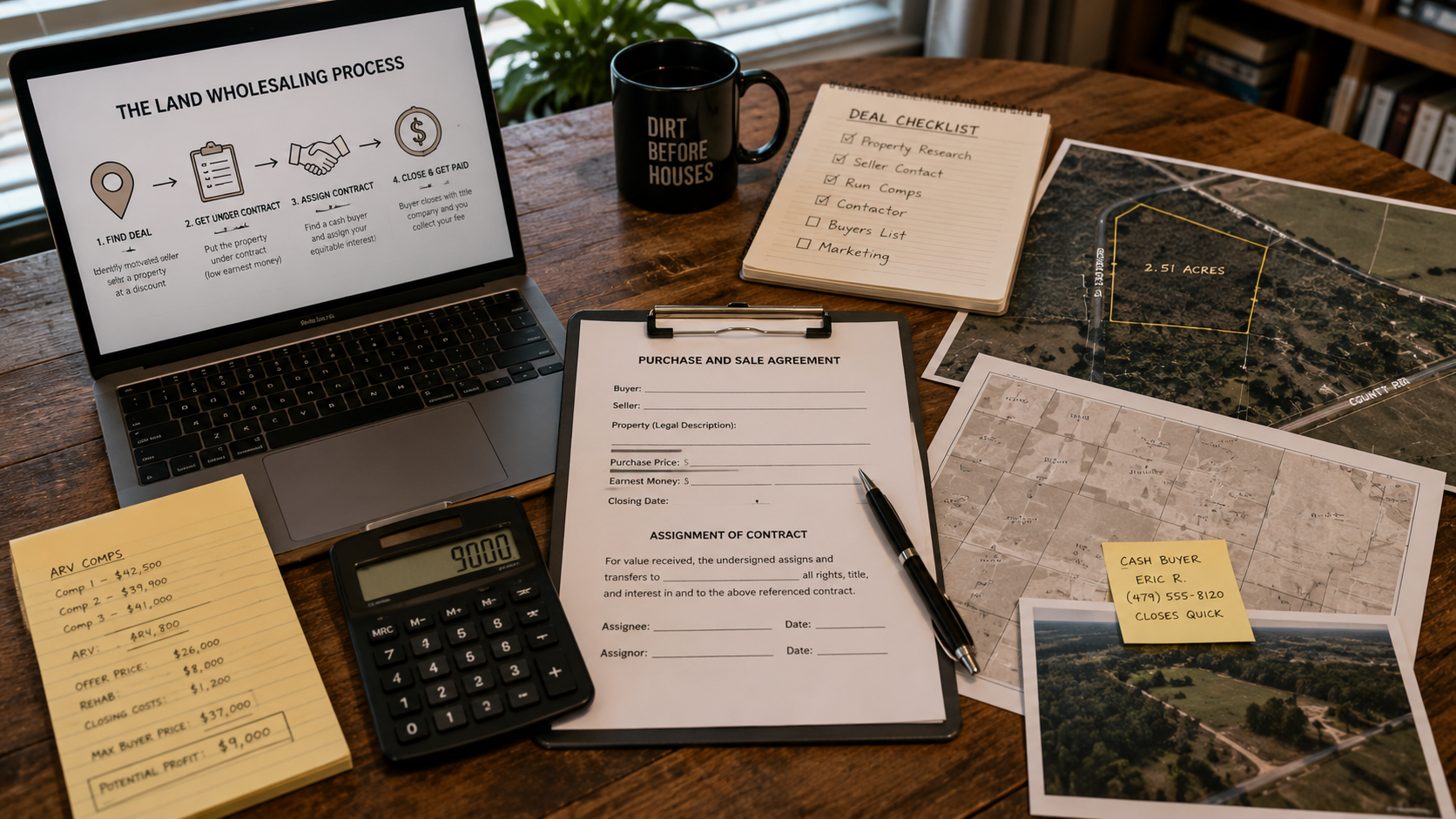
A real land-flipping business is not built on hype or random cheap parcels. It is built on selecting markets with real demand, buying with enough margin to survive mistakes, staying consistent with marketing, and running due diligence hard enough that bad deals die early. The people who last in this business usually operate more like disciplined small-business owners than like gamblers chasing one lucky spread.
Land flipping works best when you stop treating it like a side hustle fantasy
The biggest mindset shift is simple: land flipping works best as an operating business, not as a lucky side hustle.
The people who last usually do a few things well, over and over:
- they choose markets with real demand,
- they keep enough capital to market and hold correctly,
- they underwrite conservatively,
- and they stay consistent long enough for the pipeline to mature.
Market selection matters more than cheap land
One of the biggest mistakes newer investors make is confusing low prices with opportunity.
Cheap land is not automatically a good deal. In many cases it is simply cheap because demand is weak, the use case is unclear, or resale velocity is poor.
A stronger market usually shows:
- consistent sales activity,
- reasonable days on market,
- repeatable buyer demand for a recognizable parcel type,
- and enough price spread that a discounted acquisition can still exit cleanly.
That is why the first question is not “How cheap is the land?” It is “Does this type of parcel actually move here?”
Capital matters because consistency matters
This model is harder to run well when you are undercapitalized.
You do not necessarily need massive capital to start, but you do need enough to:
- market consistently,
- put up earnest money when it counts,
- solve basic due diligence,
- and avoid buying from desperation.
The less capital you have, the more likely you are to squeeze the process, chase weak deals, or stop marketing before the pipeline has time to work.
Due diligence is where discipline shows up
Land deals rarely go bad at random.
They usually go bad because someone skipped something that should have been verified:
- access,
- zoning,
- utilities,
- septic or soils,
- flood or wetlands,
- pricing,
- or the actual resale market for that parcel type.
That is why good land investors tend to kill deals aggressively before they ever buy them. The goal is not to talk yourself into deals. The goal is to survive the deals that deserve to live.
Marketing is not optional
Land flipping businesses do not run on one lucky conversation.
They run on consistent lead flow.
Whether the operator uses direct mail, calling, texting, referrals, or some other channel, the principle is the same: if conversations are not being generated consistently, the pipeline will never get strong enough to support predictable closings.
That is one reason this business rewards steadiness more than drama.
The exit matters as much as the buy
The final profit is not created at acquisition alone. It is also created by:
- pricing realistically,
- understanding who the buyer actually is,
- marketing the parcel clearly,
- and getting the property sold before dead time and holding costs start eroding the spread.
That is why strong operators usually care about acquisition discipline and disposition discipline at the same time.
Practical takeaway
If you want to build a real land-flipping business, think less about one giant deal and more about the operating system:
- real demand,
- real margins,
- real due diligence,
- real marketing consistency,
- and enough emotional control to avoid buying just because you feel behind.
That is a much more durable model than chasing whatever parcel looks exciting this week.
Related questions
- How a Land Wholesaling Deal Actually Works
- When Flipping Land Creates Real Value
- How to Price Land Fairly as a Land Operator
- Land Business Hub
Want help pressure-testing whether a market or parcel actually supports a repeatable flipping model? Ask LandShop.
Sources and further reading
FAQ
What is the biggest mistake newer land flippers make?
A common mistake is chasing cheap land instead of demand. Low price alone does not make a parcel marketable or profitable.
Do you need a lot of capital to start flipping land?
You do not necessarily need huge capital, but you usually need enough to market consistently, handle earnest money and due diligence, and avoid forcing bad deals out of urgency.
Why does due diligence matter so much in land flipping?
Because access, zoning, utilities, flood risk, soils, and resale reality can all destroy a spread if they are assumed instead of verified.
More questions in this topic
Related links
Ask LandShop
Need help applying this to a real parcel?
Bring your actual land, financing, tax, zoning, or build question into the LandShop community and pressure-test the plan before you commit.