How to Price Land Fairly as a Land Operator
Answer-first summary
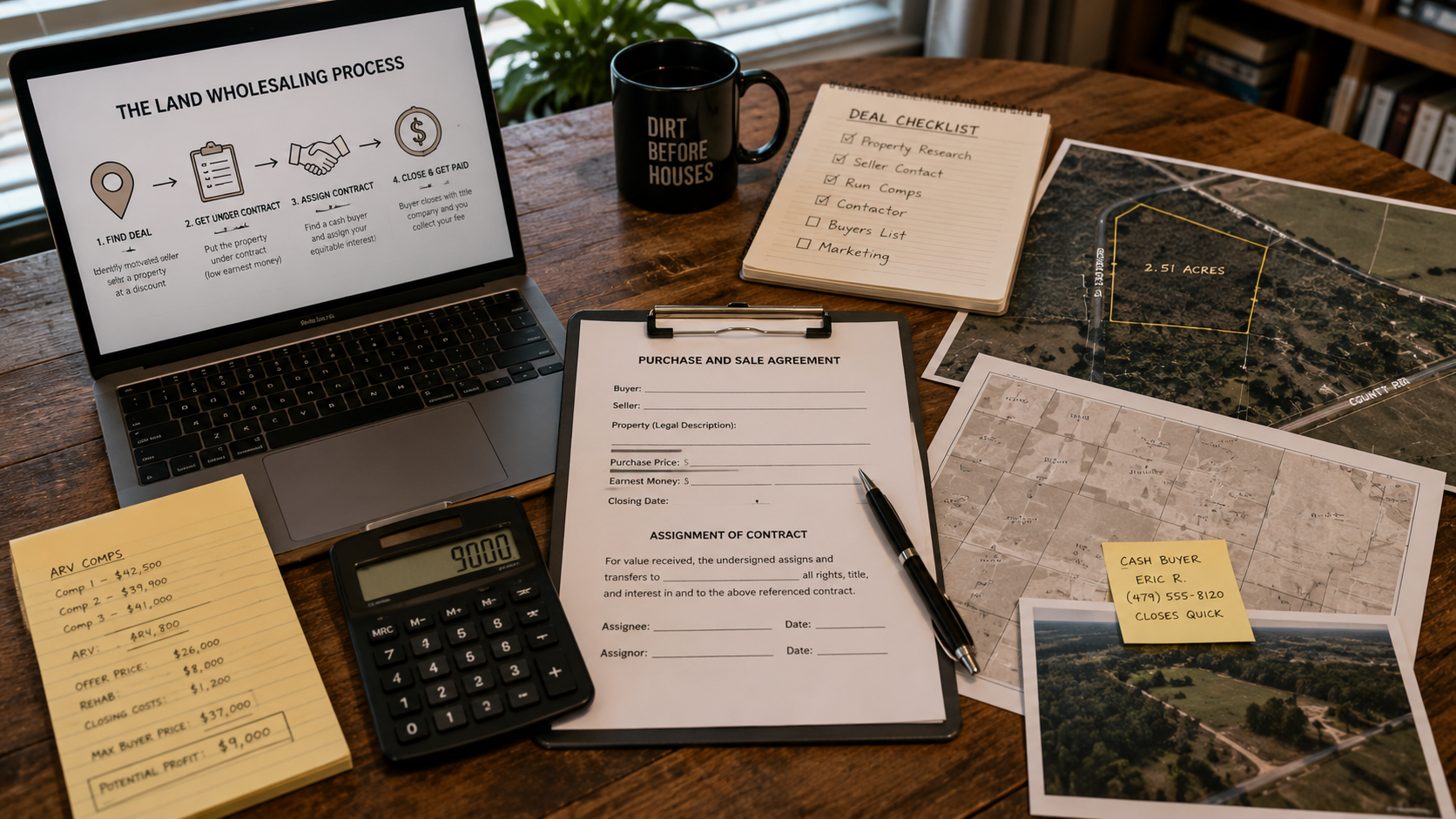
Fair land pricing starts with the market the parcel is actually in, not the story the operator wants to tell. That means using honest comparable sales, accounting for access and site issues, pricing any improvements or cleanup work realistically, and leaving a spread that reflects actual risk and work rather than confusion. Buyers do not need every deal to be cheap. They need it to be legible.
Fair pricing starts with reality, not aspiration
The easiest way to lose trust in land is to price it as if defects do not matter.
Fair pricing works differently.
It starts with asking:
- What would the parcel sell for in its current state?
- What is still unresolved?
- What real work or real risk have I taken out of the deal?
Start with honest comps
Operators should anchor to:
- similar parcels,
- similar use cases,
- similar access and utility conditions,
- and recent sales that actually reflect the market.
If the parcel is harder than the comparable sales, the price should reflect that. If it is cleaner, clearer, or easier to finance, the price can reflect that too.
The spread should have a reason
A healthy spread can reflect:
- acquisition effort,
- holding costs,
- survey or title work,
- marketing costs,
- owner-financing risk,
- and actual market knowledge.
What it should not reflect is a belief that buyers will not notice obvious issues.
Practical takeaway
Fair pricing does not mean every parcel has to be a bargain. It means the price should make sense once the defects, improvements, and market evidence are laid side by side.
That is the standard that keeps operators credible and keeps buyers from having to decode the whole deal from scratch.
Related questions
- When Flipping Land Creates Real Value
- How to Wholesale Land Without Burning Your Reputation
- Land Business Hub
Want help evaluating whether a price reflects real work or just optimism? Ask LandShop.
Sources and further reading
FAQ
What makes a land price fair?
A fair land price lines up with real comparable sales, real parcel conditions, and a spread that reflects actual work, cost, or risk rather than confusion.
Can a fair price still include a healthy margin?
Yes. Margin is not the problem. The problem is when the margin is disconnected from the parcel’s real market position and the work actually performed.
Why do defects need to be priced in so explicitly?
Because access, utilities, soils, title, and site-work risks change what the land is really worth to the next buyer.
More questions in this topic
Ask LandShop
Need help applying this to a real parcel?
Bring your actual land, financing, tax, zoning, or build question into the LandShop community and pressure-test the plan before you commit.