Food Freedom Is Not the Same as No Standards
Answer-first summary
Food freedom does not mean no one cares what is being sold. It means small local transactions should not automatically be forced into the same structure as industrial food distribution. The real question is not standards versus no standards. It is which standards fit a direct local system, which ones only make sense at industrial scale, and how to preserve accountability without killing small producers before they can serve their communities.
The argument is not “anything goes”
Whenever people argue for more local food freedom, the pushback is predictable.
Someone assumes the claim is really:
- no standards,
- no accountability,
- no hygiene,
- no quality control,
- and no consequences.
That is not the serious version of the argument.
The serious version is much narrower and more practical.
It says that a direct farm-to-buyer food transaction should not automatically be treated like an industrial distribution problem.
That distinction matters because the current system often jumps straight from “food matters” to “therefore every seller must fit industrial compliance logic.”
Those are not the same thing.
Standards only make sense if they match the actual system
Every food system needs trust.
The question is where that trust comes from and what it should require.
In an industrial system, trust often depends on:
- centralized processing,
- large facilities,
- documented compliance chains,
- standardized packaging,
- and long-distance oversight.
In a local direct system, trust may depend more on:
- visible production,
- repeat relationships,
- known producers,
- direct reputation,
- and immediate local consequences when something is done poorly.
Neither model exists outside accountability.
But they are not identical systems, so pretending they need identical forms of compliance creates unnecessary damage.
Scale-blind rules usually become anti-small rules
This is where people get stuck.
A requirement may sound neutral in theory. But if it only makes economic sense at volume, then it is not neutral in practice.
That is how “equal treatment” becomes unequal pressure.
A rule that is survivable for a national company may be fatal for:
- a family making a local prepared-food product,
- a small poultry processor,
- a direct-market dairy operator,
- or a farm trying to add one value-added revenue stream.
So the issue is not whether standards exist.
The issue is whether standards are so scale-blind that they only leave room for the biggest players.
Direct local food already has forms of accountability
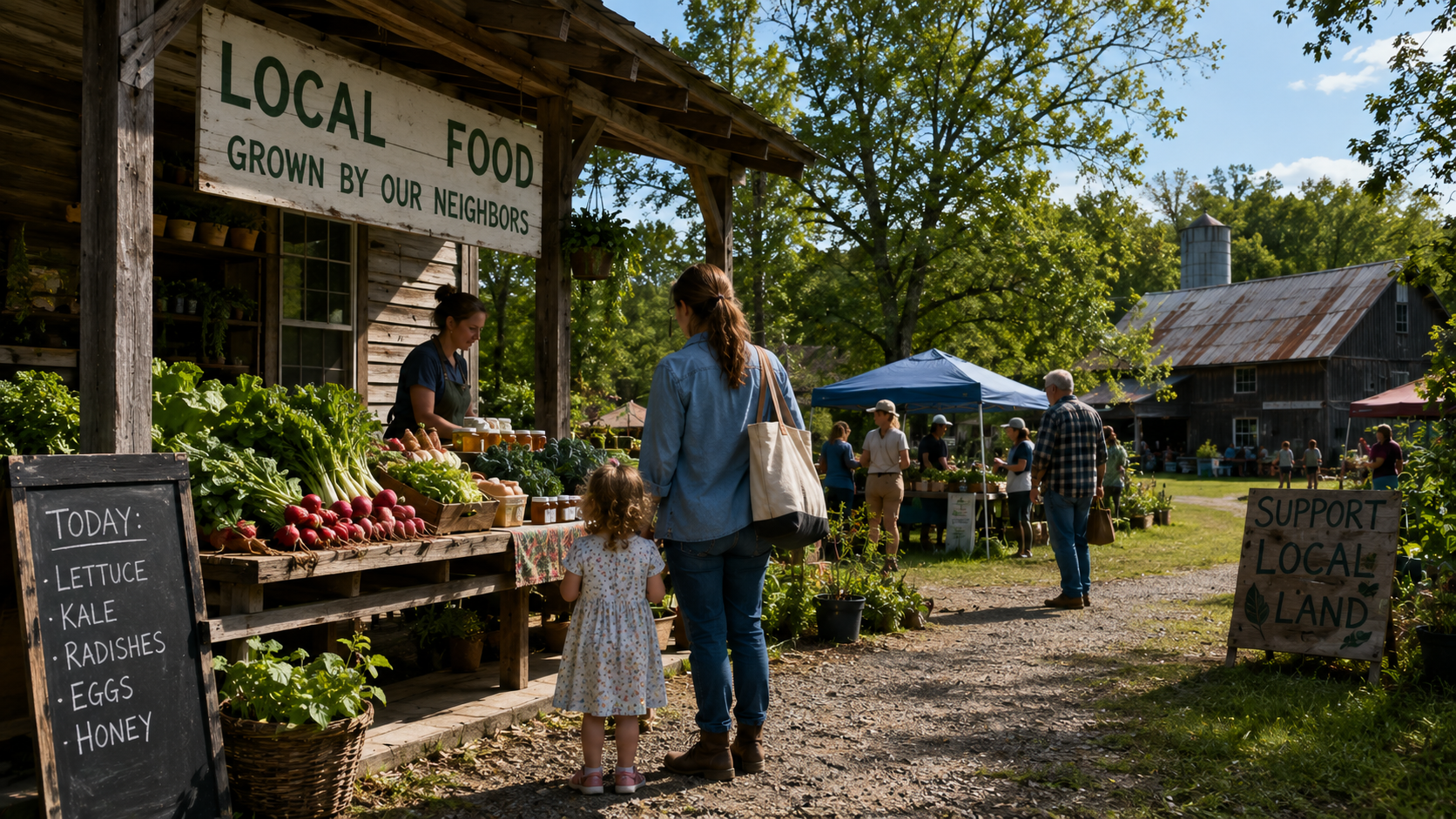
One of the strongest parts of local food systems is that they are personal.
That does not solve everything.
But it does create:
- visible trust,
- repeat scrutiny,
- immediate reputation effects,
- and more direct feedback than many large anonymous systems ever face.
A bad product from a direct local producer does not disappear into a brand hierarchy. It comes back to a name, a place, and a relationship.
That is a real standard.
It may not look like a federal document. But it changes behavior because the producer is directly exposed to the buyer.
A better framework would separate risk by context
If LandShop is going to talk about this responsibly, the useful path is not to demand a free-for-all.
The useful path is to argue for context.
That means recognizing differences between:
- direct local sales and anonymous mass distribution,
- low-volume local preparation and industrial output,
- known buyers and unknown national channels,
- and visible local production versus hidden centralized production.
Those differences should shape how accountability works.
That is a more serious and defensible position than pretending every food transaction belongs under one universal operating model.
Why this matters for small landowners
This matters because many landowners are not trying to become giant food companies.
They are trying to make:
- one product,
- one local route,
- one dependable customer list,
- or one revenue stream that helps a small acreage carry itself.
If the only legal shape of food enterprise is industrial, then those landowners are effectively blocked from using their land in one of the most practical ways available to them.
That is why food freedom belongs inside a land conversation. It changes whether land can support local livelihood at all.
Practical takeaway
Food freedom is not the same as no standards.
The better question is whether standards are matched to the kind of food system they govern.
If local direct sales are treated like industrial distribution, small producers lose before they begin. If local accountability is taken seriously and standards are scaled to reality, communities get more access, more resilience, and more room for better food to exist.
Related reading
FAQ
Does food freedom mean no food safety rules?
No. It means food rules should fit the real context of the transaction instead of automatically assuming every sale belongs inside an industrial distribution model.
Why do local direct sales have accountability?
Because the producer is visible, the buyer often knows who made the food, and bad quality damages trust quickly in a direct local relationship.
Why is scale such a big part of this issue?
Because requirements that sound neutral can be economically survivable for large companies while becoming impossible for low-volume small farms and local processors.
More questions in this topic
Related links
Ask LandShop
Need help applying this to a real parcel?
Bring your actual land, financing, tax, zoning, or build question into the LandShop community and pressure-test the plan before you commit.