Why Homes Should Be Built for Living, Not Just Investment
Answer-first summary
A lot of people are not just priced out of housing. They are priced out of ownership, stability, and the ability to build a life on their own terms. When too much of the market is shaped around margins, branding, and investor math, the result is housing that may look polished on paper but often feels disconnected from how people actually want to live.
Why ownership feels farther away
The housing conversation often gets flattened into one idea: prices are too high. That is true, but it is not the whole problem. For many people, the deeper frustration is that the path to ownership feels less real than it used to.
There are still homeowners in America, but the entry point has moved further away for a lot of buyers. The U.S. Census Bureau reported a 65.7% homeownership rate in the fourth quarter of 2025, but that topline number hides how hard it has become to move from renting into ownership in the first place.
That shows up clearly in buyer data. The National Association of Realtors said first-time buyers made up just 21% of purchasers in 2025, a record low, and their median age rose to 40. Ownership is not disappearing, but the on-ramp is getting steeper.
Homes for living, not spreadsheets
When people say housing feels broken, they are not only talking about cost. They are reacting to a market that often feels optimized for margin, resale strategy, and institutional models rather than for ordinary life.
Too much housing feels built to satisfy a spreadsheet:
- larger finishes but thinner usefulness,
- premium branding without long-term flexibility,
- and products designed for yields, not for rooted living.
People do not just want a unit. They want a place they can shape, improve, protect, and grow into over time. That is what makes ownership so powerful. It is not only a financial category. It is a form of control, stability, and belonging.
The market is strained, but the answer is not fake luxury
America still has a housing supply problem. Freddie Mac estimated the country was short about 3.7 million housing units as of the third quarter of 2024. But shortage alone does not explain why so much of what gets built feels out of sync with what many people actually need.
At the same time, affordability pressure keeps rising. The Joint Center for Housing Studies of Harvard reported that 22.7 million renter households, or 49% of renters, were cost-burdened in 2024, meaning they spent more than 30% of income on housing.
That combination matters. If people are paying more of their income just to stay housed, it gets harder to save for land, a down payment, site work, utilities, or a smaller first build. The result is that many people stay trapped in expensive temporary housing while more expensive and more polished product keeps getting pushed to the front.
Smaller and simpler is not a step backward
One of the most useful corrections happening in housing is a move away from bigger-for-the-sake-of-bigger. NAHB reported that median new single-family floor area fell to 2,176 square feet in the third quarter of 2025 and has generally been declining since 2015.
That trend matters because it reflects something practical: a lot of people do not need more spectacle. They need a more realistic path into ownership.
A smaller, intentional home can be stronger than a larger, overextended one if it gives you:
- lower carrying costs,
- more flexibility,
- easier maintenance,
- and a better chance of keeping the property long term.
That does not mean everyone should build tiny forever. It means a first home does not have to be the final version on day one.
Building in phases changes the math
One of the biggest mistakes in housing is assuming the only valid path is to buy or build the finished version all at once. For many buyers, that is exactly what makes ownership feel impossible.
Phased building offers a more grounded model:
- Buy usable land first.
- Solve legal access, utilities, and site basics.
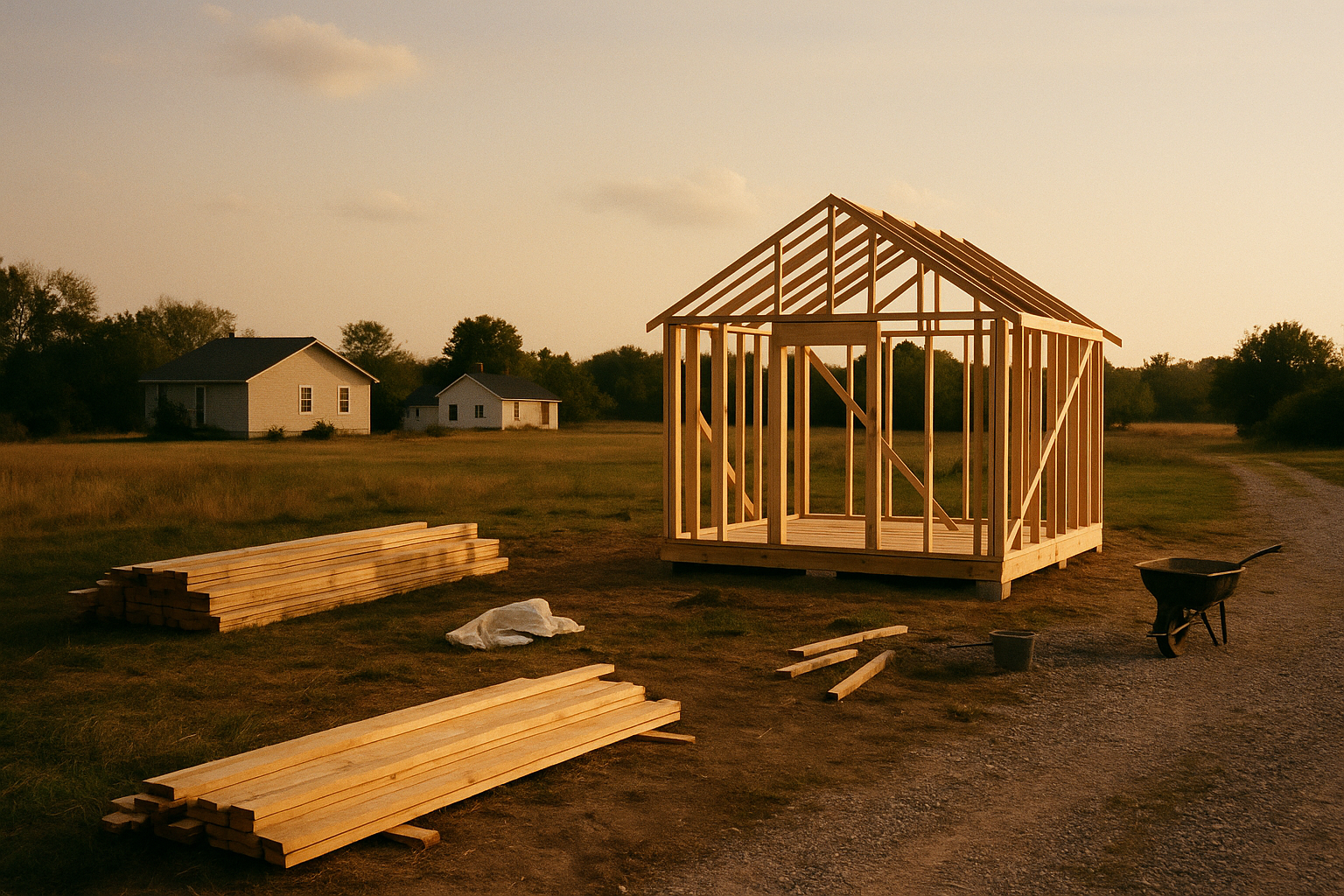
- Start with a smaller structure that truly works.
- Improve the property over time.
- Expand only when the next phase makes sense.
This is not about settling for less. It is about building with intent instead of debt-driven pressure.
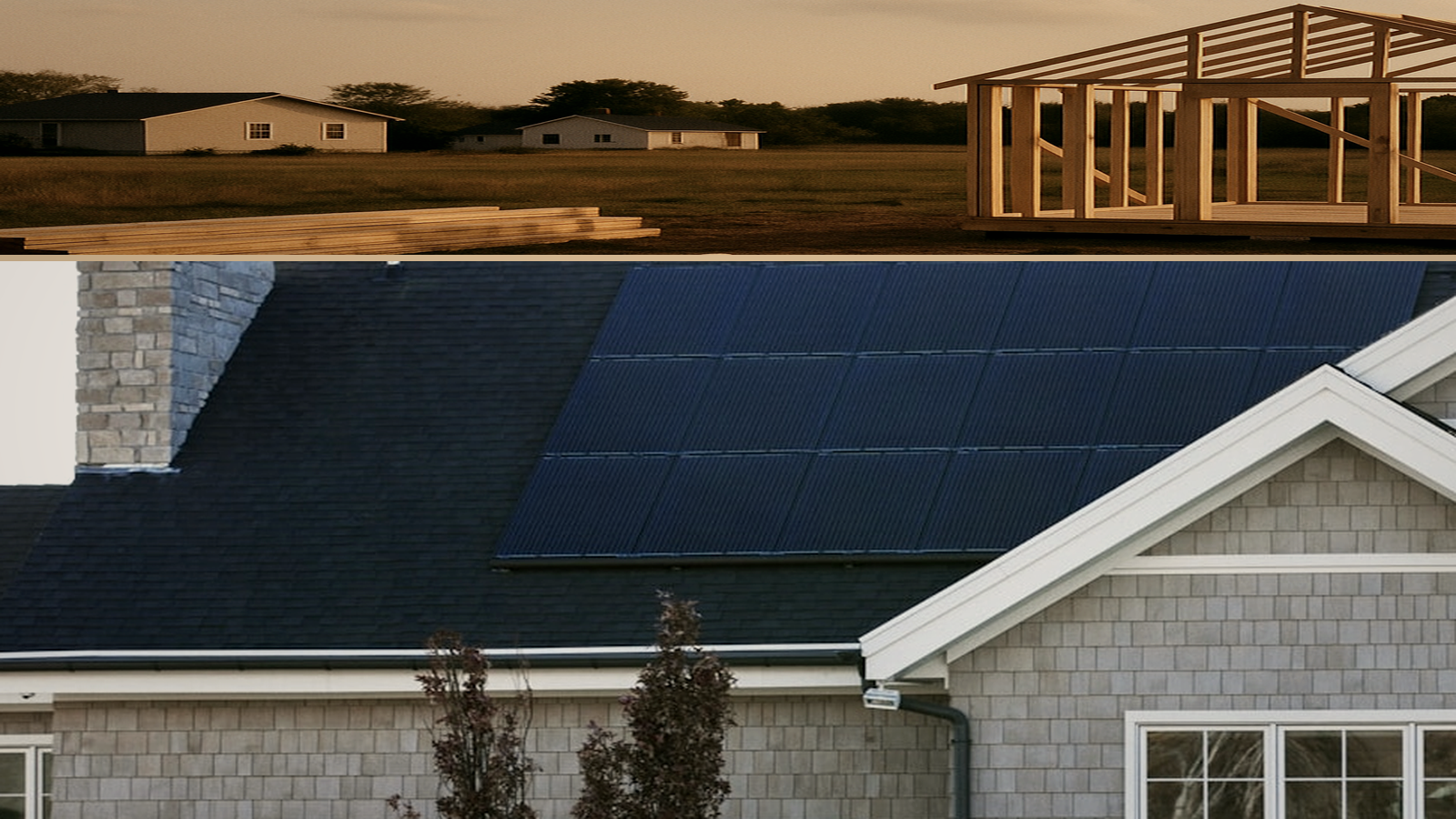
Land makes this possible because land creates optionality. It lets people start from use, not image. It gives room to sequence decisions rather than overcommit before they have even lived on the property.
A more practical way back into ownership
If the goal is ownership, the question is not just “What house can I buy right now?”
The better question is “What kind of property can I realistically control, use, and improve over the next five to ten years?”
For some people, that may be a modest parcel with owner financing. For others, it may be raw land with a long-term utility plan. For others, it may be a simple first build that becomes part of a larger site plan later.
The common thread is intent:
- build for how you actually live,
- buy for long-term control,
- keep the first phase manageable,
- and let the property grow with your life.
That is a very different framework from chasing fake luxury or waiting for a polished all-in-one solution that may never become realistic.
Ownership first
The strongest housing response right now is not just asking why the market feels distorted. It is deciding what we want to build instead.
More people want homes for living, not spreadsheets. They want land they can use. They want places that can evolve. They want ownership that feels real, not aspirational in theory and unreachable in practice.
That does not mean every problem gets solved by buying land or building smaller. But it does mean there is still a path worth defending: ownership first, intentional building, and homes designed around real life instead of financial theater.
Want help thinking through land, phased building, or a more realistic path into ownership? Sign up for LandShop and ask questions in the community. You can learn from other buyers, share your plan, and get practical feedback step by step.
Sources and further reading
- U.S. Census Bureau: Housing Vacancies and Homeownership, Q4 2025
- National Association of Realtors: First-Time Buyer Share Falls to 21%, Median Age Rises to 40
- Harvard Joint Center for Housing Studies: Housing Unaffordability Soared to New Highs in 2024
- Freddie Mac: Housing Supply Still Undersupplied
- NAHB: Single-Family Home Size Continues to Decline
FAQ
Why does ownership feel harder even if many Americans still own homes?
Because the main challenge for many households is getting onto the ownership ladder. First-time buyer share has fallen while the median first-time buyer age has climbed, which shows entry is getting harder even if total homeownership remains relatively stable.
What does building in phases mean?
It means sequencing ownership: buy usable land, solve access and utility basics, start with a smaller first structure, and expand only when the next phase makes financial and practical sense.
Why does LandShop focus on homes for living instead of fake luxury?
Because many buyers need durable ownership, flexibility, and control more than they need oversized finishes or housing designed mainly to maximize investor returns and resale optics.
More questions in this topic
Related links
Ask LandShop
Need help applying this to a real parcel?
Bring your actual land, financing, tax, zoning, or build question into the LandShop community and pressure-test the plan before you commit.